
5 MUST-TRY VIETNAMESE BREAKFASTS (NOT PHỞ OR BÁNH MÌ)
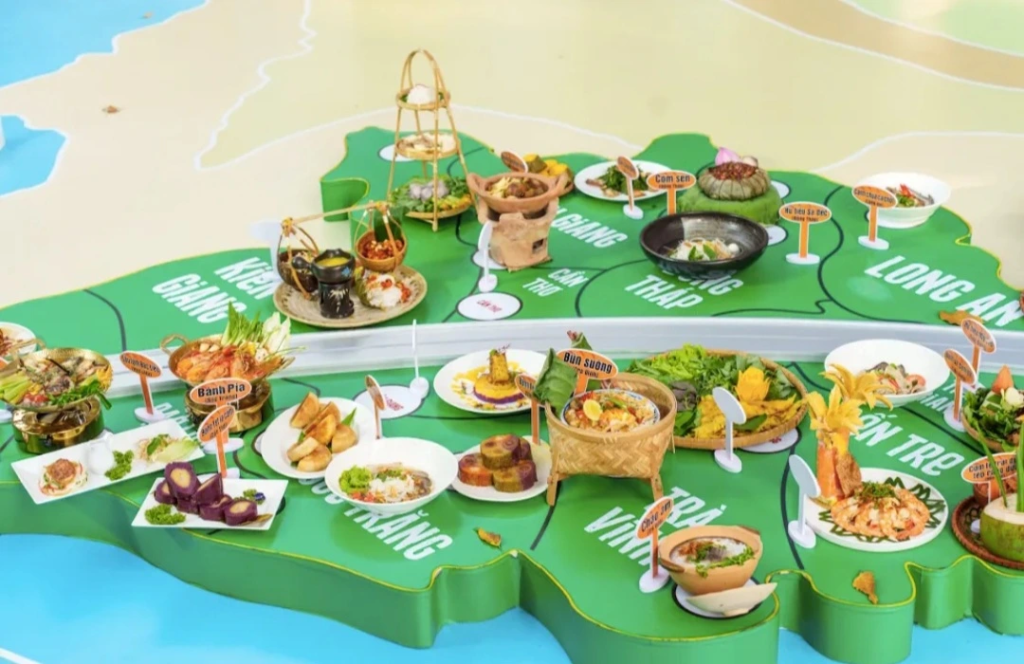
When traveling in Vietnam, breakfast is more than just the first meal of the day. It is a great way to understand local culture and daily life. From busy streets in Ho Chi Minh City to quiet corners in Hanoi, Vietnamese breakfasts are simple, fresh, and full of flavor.
Besides famous dishes like phở and bánh mì, Vietnam has many other traditional breakfasts worth trying. Below are five must-try Vietnamese breakfast dishes that will make your mornings unforgettable.
BÁNH CUỐN (STEAMED RICE ROLLS)
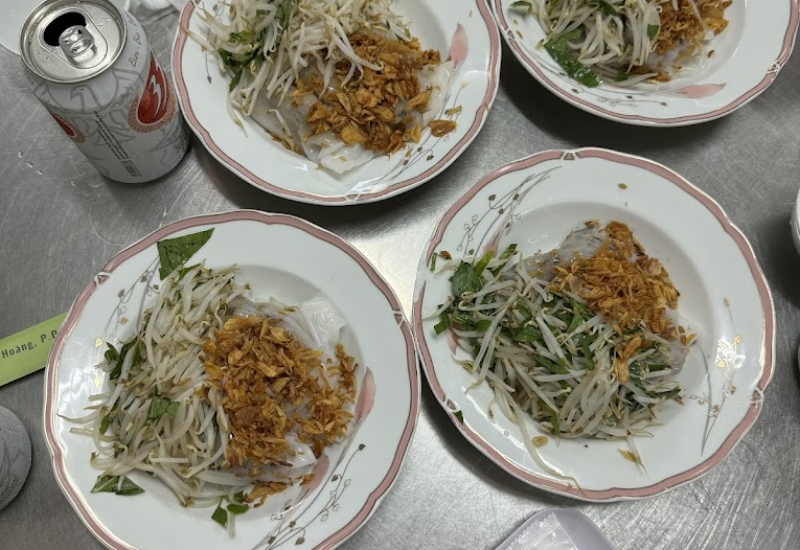
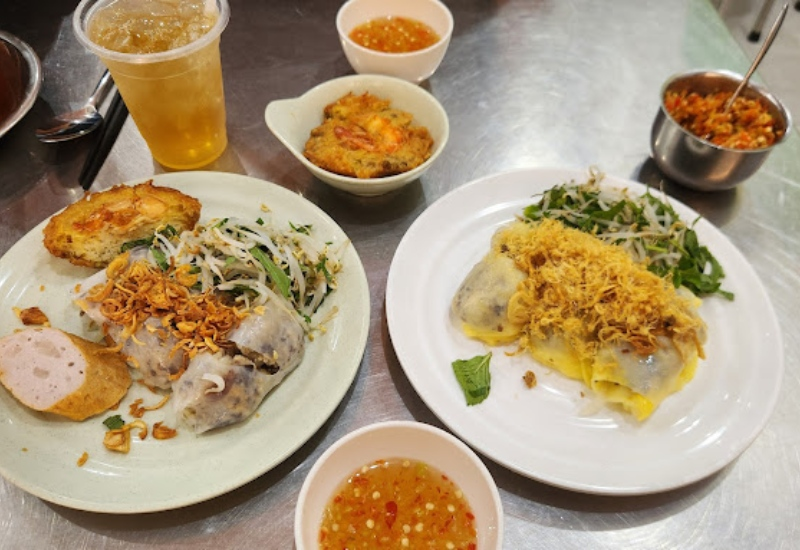
Steamed rice rolls (bánh cuốn) are one of the most familiar and long-standing breakfast dishes in Vietnam. This dish looks simple, but it impresses diners with its thin, soft sheets made from finely ground rice flour mixed with tapioca starch and water in a balanced ratio.
In the traditional method, people often use old rice instead of new rice, because new rice contains more starch, which makes the batter sticky and difficult to steam. The batter is spread into a thin layer on a cloth-covered steamer, cooked by hot steam, and then carefully lifted off.
Each region has its own style of bánh cuốn:
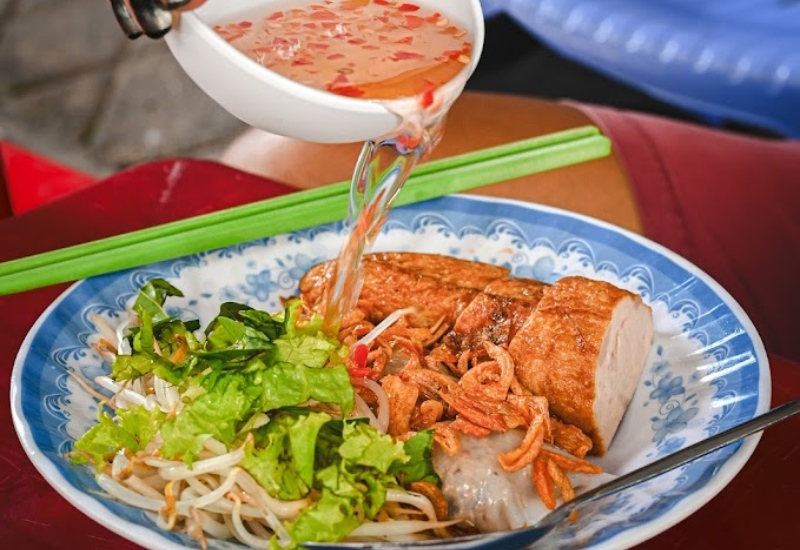
- Phu Ly-style bánh cuốn (Ha Nam): no filling, neatly folded, topped with crispy fried shallots, served with grilled pork sausage, and dipped in sweet fish sauce.
- Thanh Tri-style bánh cuốn (Hanoi): very thin and slightly chewy, brushed with scallion oil, usually served with cinnamon pork sausage and fish sauce, balancing salty, sweet, sour, and spicy flavors.
The combination of soft rice sheets, fragrant sausage, and rich fish sauce creates a light yet unforgettable taste.
Suggested bánh cuốn restaurants in Ho Chi Minh City:
XÔI (STICKY RICE)
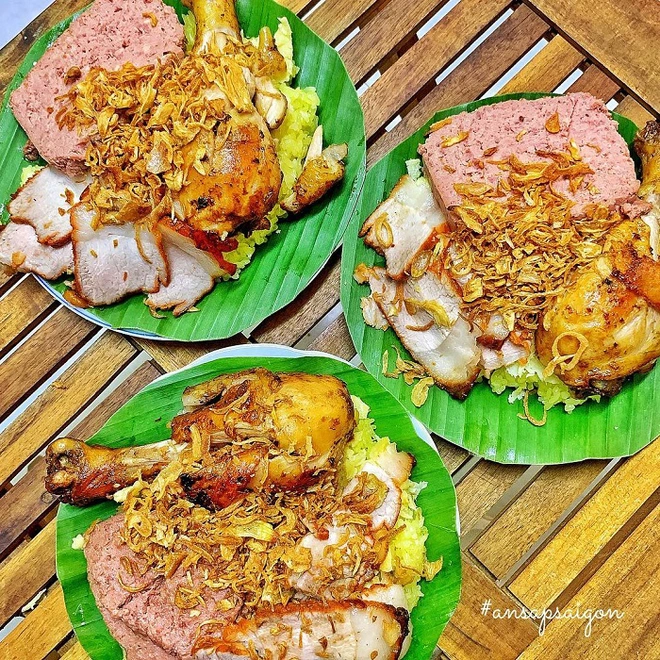
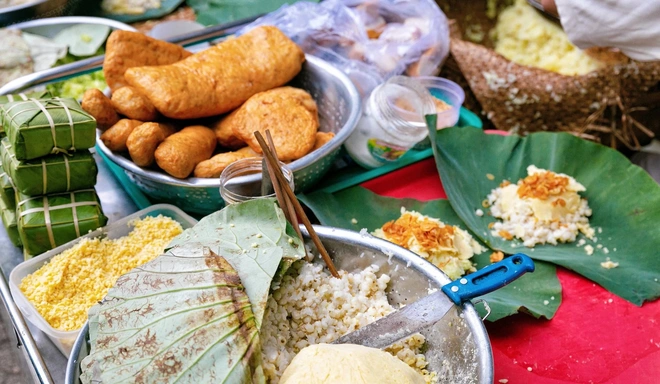
Vietnam is a rice-based country, so rice dishes are very important in daily meals. One of the most common breakfast foods is xôi, or sticky rice.
Xôi is usually sold in small warm packages that fit in one hand. It smells of sticky rice and beans and is simple but filling.
There are many types of xôi:
- Xôi vò (sticky rice mixed with mashed mung beans)
- Xôi xéo (sticky rice with mung bean paste and fried shallots)
- Xôi with peanuts, white beans, or black beans
- Savory xôi with Chinese sausage, pork sausage, pâté, quail egg, and sometimes shredded pork
Good sticky rice places:
BÒ NÉ (VIETNAMESE SIZZLING BEEF)
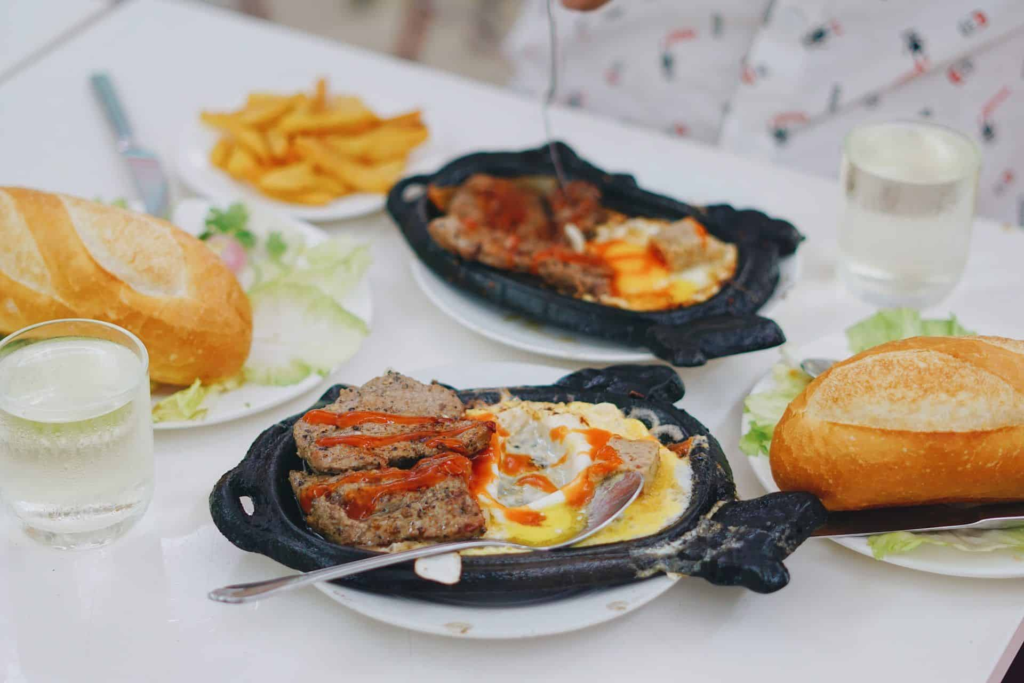
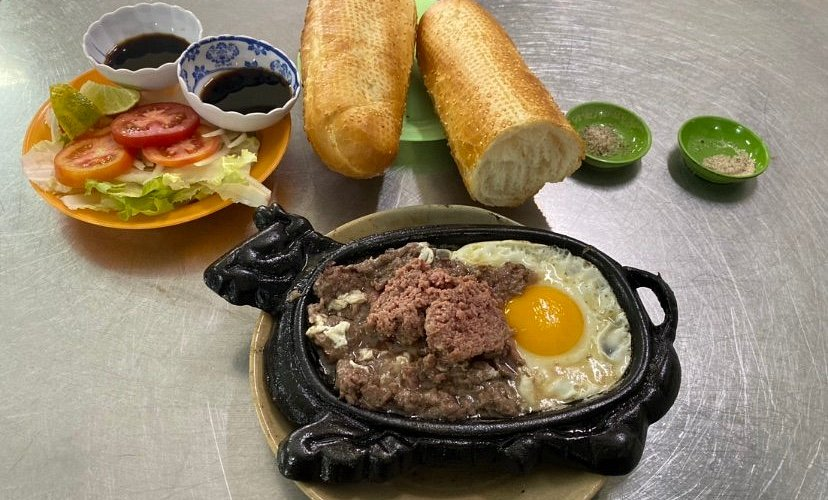
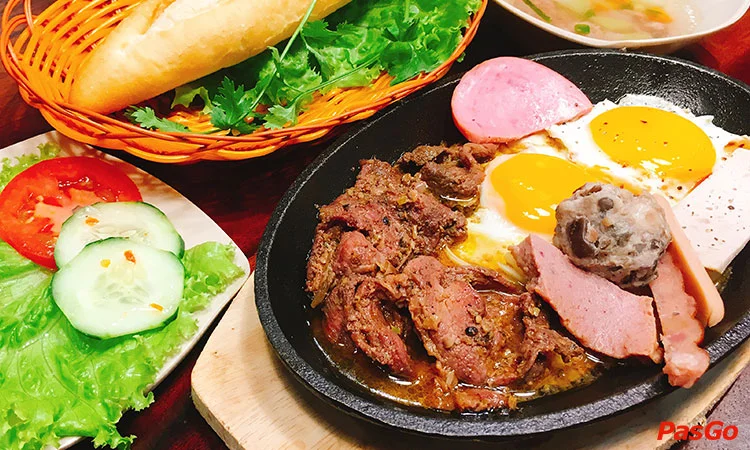
Saigon-style bò né is a street food dish adapted from Western steak to suit Vietnamese taste and budget. It includes many ingredients such as sliced beef, potatoes, pâté, fried egg, salad, and bread.
To cook this dish, a cast-iron pan is heated, oil is added, and then sliced beef, fried egg, onions, and pâté are placed on top. When served, the hot pan is put on a wooden board, and the oil is still sizzling and may splash. Because diners need to “move away” from the splashing oil, the dish is called bò né (which means “dodge the beef”).
When eating, you can add soy sauce and chili sauce into the pan, and enjoy it with bread, vinegar-oil salad, tomato, and cucumber to make the meal less heavy. A good bò né should be a perfect balance of ingredients: fresh beef well-marinated with spices, soft pâté, salad that is not too sour, and bread with a crispy crust but a soft inside.
Good bò né places:
BÁNH KHỌT (MINI RICE PANCAKES)
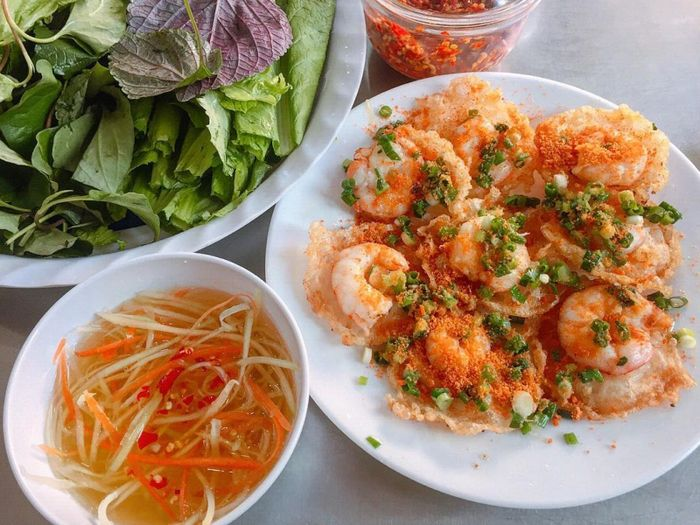
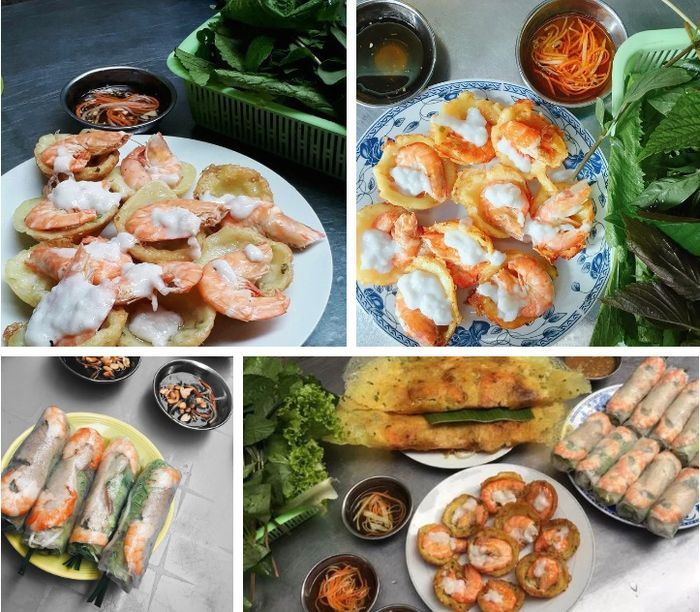
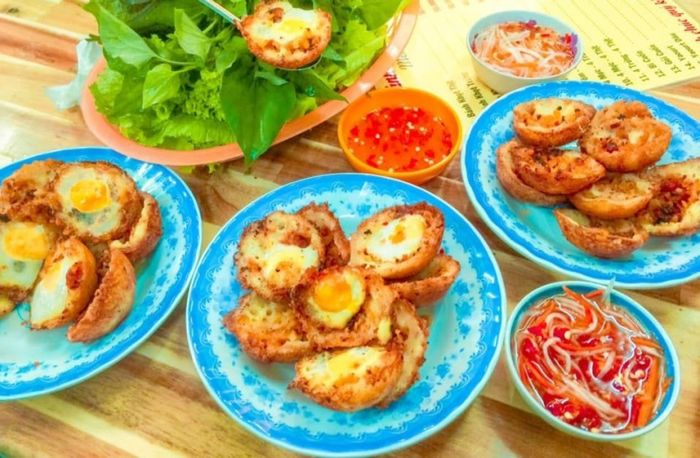
Bánh khọt stands out with the unique flavor of Vietnam’s coastal regions. It is a special combination of fresh seafood taste, the light freshness of herbs, and the rich sweet-salty flavor of dipping fish sauce. All these elements come together to make bánh khọt truly distinctive and memorable for diners.
Bánh khọt is usually made from rice flour or tapioca flour. The filling is commonly fresh small shrimp, medium in size and peeled. On top, the cakes are sprinkled with crispy dried shrimp and fragrant scallion oil.
Bánh khọt is often eaten with a variety of fresh herbs such as mustard greens, lettuce, perilla leaves, and fish mint. It is also served with lotus stem or shredded green papaya, which adds more texture and appeal to the dish.
The dipping sauce for bánh khọt is typically made from fish sauce mixed with warm water, garlic, and lime juice. The balanced sweet and sour taste of this sauce creates a perfect flavor that makes bánh khọt hard to confuse with any other dish.
Good bánh khọt places:
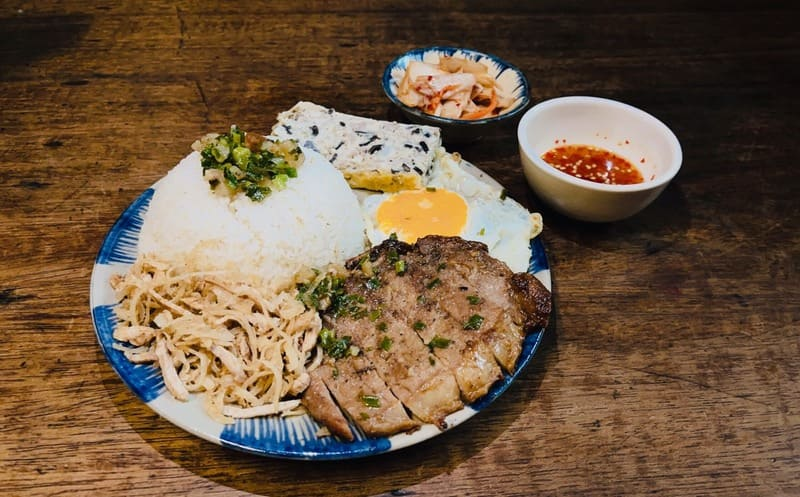
CƠM TẤM (BROKEN RICE)
Cơm tấm is not just a dish but also a unique symbol of Southern Vietnamese cuisine, especially of Saigon.
Broken rice grains, which are the small pieces of rice that break during milling, are cheaper and do not expand much when cooked. Because of this, they became an economical choice for daily meals. In the past, this traditional dish was mainly eaten by workers, farmers, and students with limited budgets. Over time, cơm tấm has built its reputation, growing from a simple street food into a famous Saigon specialty and spreading across the whole country.
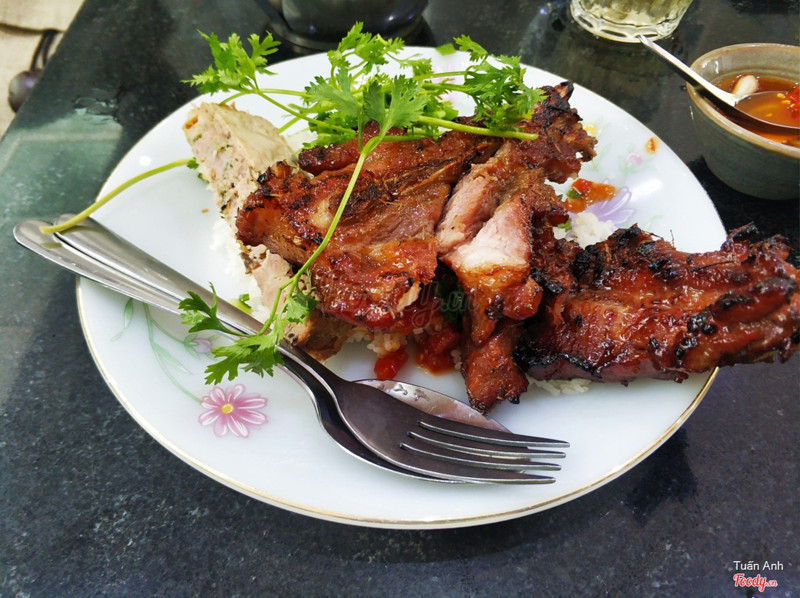
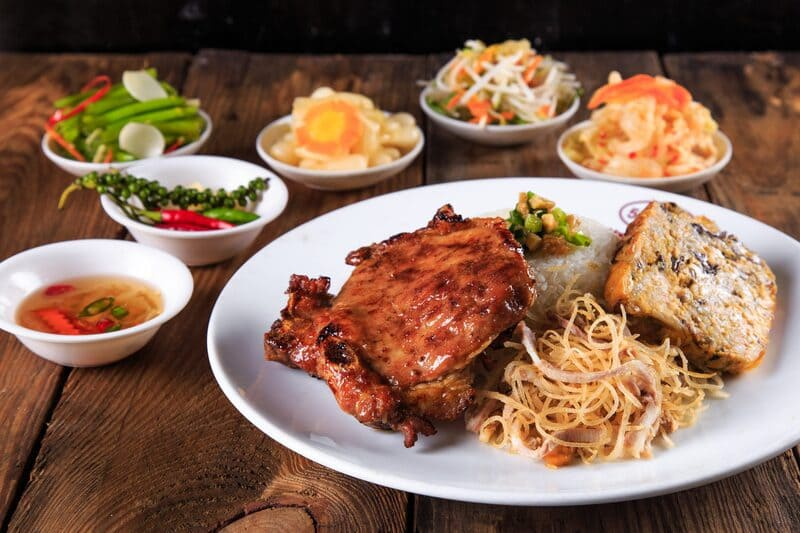
A complete plate of cơm tấm is not only visually appealing but also a careful combination of many ingredients. Every element, from the rice to the grilled pork chop, plays an important role in creating the unforgettable flavor of cơm tấm.
When introducing cơm tấm, it is impossible not to mention grilled pork chop, steamed egg meatloaf, and shredded pork skin, all served with sweet and sour fish sauce. Together, these components lift the dish to a true highlight of Vietnamese cuisine in the hearts of diners.
Good cơm tấm places:
Conclusion
Trying these breakfast dishes is a wonderful way to experience Vietnam beyond famous foods like phở and bánh mì. Each dish tells a story about local life, history, and regional taste.
If you wake up early in Vietnam, step outside, follow the food smells, and enjoy breakfast like a local—you will not regret it.
Adventure Saigon: 4-Hour Tours

4 hours
$58.50 $65.00
4 hours
$33.25 $35.00

4 hours
$33.25 $35.00
4 hours
$33.25 $35.00
4 hours
$30.40 $32.00
4 hours
$46.55 $49.00

4 hours
$29.45 $31.00
Explore Cu Chi Tunnels with Saigon Taste Tours team

5 hours
$53.10 $59.00
12 hours
$40.50 $45.00
8 hours
$66.60 $74.00
7.5 hours
$31.50 $35.00

6.5 hours
$31.50 $35.00
Explore Mekong Delta Adventures
5 hours
$53.10 $59.00
9 hours
$53.10 $59.00
9 hours
$58.50 $65.00

10 hours
$62.10 $69.00
48 hours
$532.80 $592.00

8 hours
$40.50 $45.00
Explore Ho Chi Minh Combos, Day Trips

9 hours
$60.30 $67.00

9 hours
$60.30 $67.00
12 hours
$40.50 $45.00
8 hours
$66.60 $74.00
10 hours
$62.10 $69.00
4 hours
$58.50 $65.00



Saigon Taste Tours team
Welcome to SAIGON TASTE Tours!We’re a team of passionate local guides dedicated to sharing the real Saigon and Vietnam through food, culture, and hidden gems. From bustling street food stalls and historic landmarks to outdoor adventures and peaceful nature escapes, our tours are designed to be authentic and unforgettable. Every experience is private and tailored to you, guided by knowledgeable locals who go above and beyond to make you feel like you’re exploring with a friend. With us, you won’t just visit Vietnam — you’ll truly experience it.We can’t wait to welcome you! Best regards, Ben and the SAIGON TASTE Tours
saigontastetours@gmail.com Click to Connect with Us
Leave a Reply