
FEATURED TOUR-5%
4 hours
$59.85 $63.00
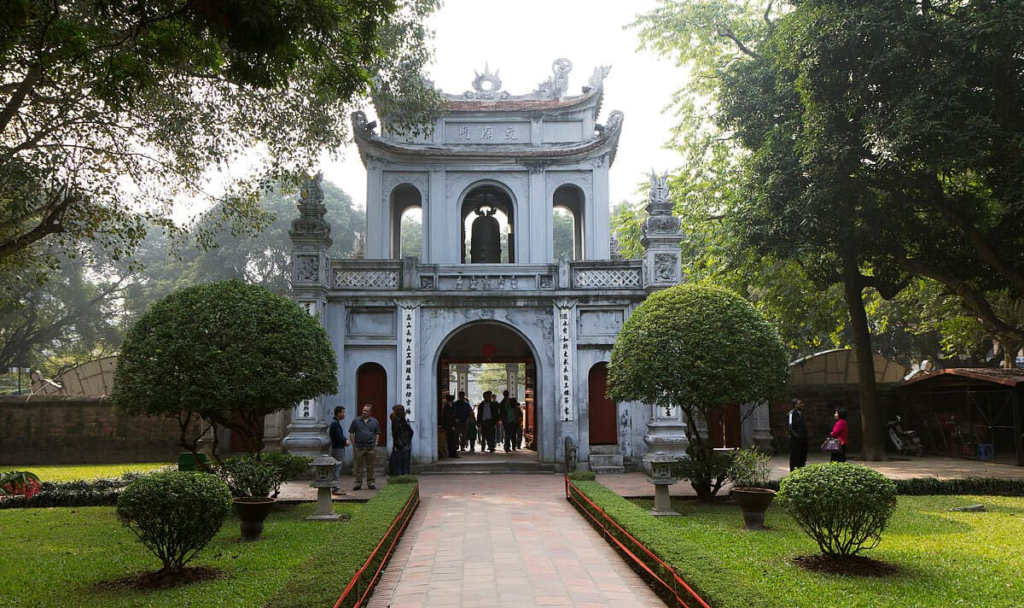
The Temple of Literature – Imperial Academy (Văn Miếu – Quốc Tử Giám) is not only one of Hanoi’s most iconic historical sites, but also a powerful symbol of Vietnam’s long-standing respect for education, knowledge, and scholars. As the first national university of Vietnam, this complex preserves invaluable cultural and historical legacies of a capital city with over a thousand years of civilization.
Located in the heart of Hanoi, the Temple of Literature offers visitors a deep journey into the origins of Vietnamese intellectual tradition, Confucian education, and architectural heritage.
The Temple of Literature was established in 1070 during the reign of King Lý Thánh Tông. Initially, it served as a sacred site dedicated to Confucius, Duke of Zhou, and the Four Disciples (Tứ Phối)—key figures in Confucian philosophy.
In 1076, under King Lý Nhân Tông, the Imperial Academy (Quốc Tử Giám) was built next to the temple. This institution functioned as a school exclusively for princes and children of royal and noble families, marking the birth of Vietnam’s formal higher education system.
During the reign of King Trần Thái Tông, the institution was renamed the National Academy (Quốc Học Viện) and began admitting exceptionally talented students from common families—an important milestone reflecting the merit-based spirit of Vietnamese education.
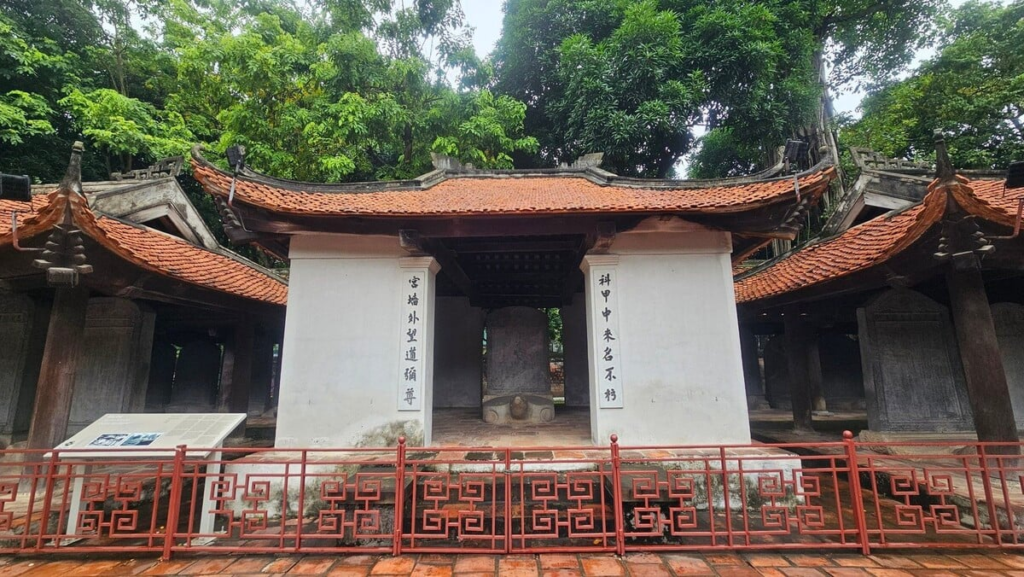
Under King Lê Thánh Tông, stone steles were erected to honor doctoral laureates who passed the highest imperial examinations. These steles later became one of the most valuable historical records of Vietnam’s scholarly achievements.
During the Nguyễn Dynasty, another Imperial Academy was established in Huế City. The Hanoi complex was renovated and officially renamed Temple of Literature of Hanoi.
In 1947, during the resistance war against French colonial forces, parts of the complex were severely damaged by artillery fire, leaving only foundations, two columns, and four stone ink slabs from certain structures.
Despite historical upheavals, the Temple of Literature has endured as a testament to Vietnam’s intellectual resilience.
Covering an area of approximately 54,331 square meters, the complex consists of multiple architectural elements, including:
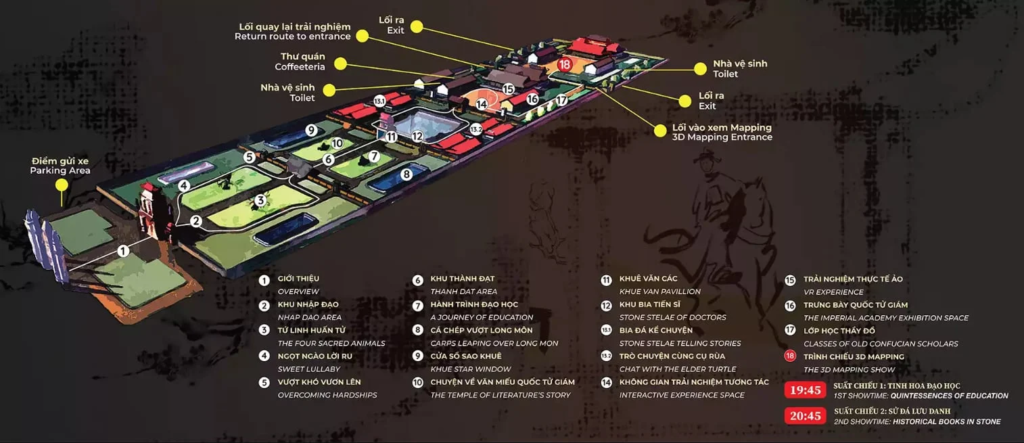
Surrounded by ancient brick walls weathered by time, the site reflects early Nguyễn Dynasty court architecture, with a symmetrical layout aligned along the traditional North–South axis.
The complex is divided into five courtyards, separated by walls and gates:
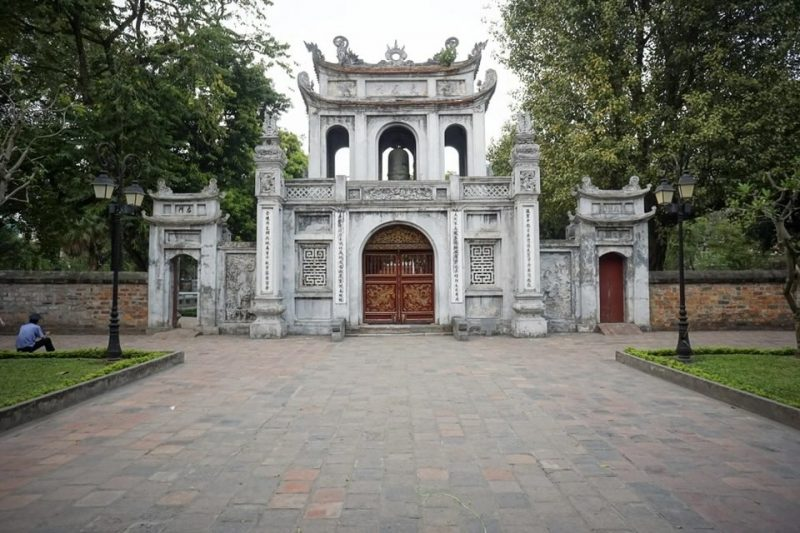
Văn Miếu Môn is a three-entrance ceremonial gate with two levels, exuding solemnity and dignity. The upper level bears the three Chinese characters “Văn Miếu Môn.” In front of the gate stand two stone steles and a four-pillar ceremonial structure.
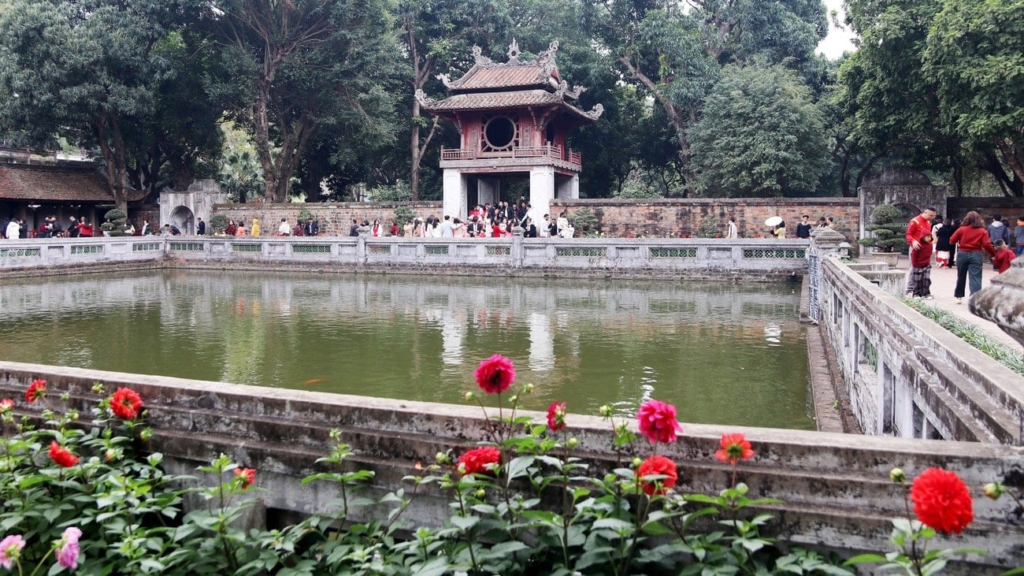
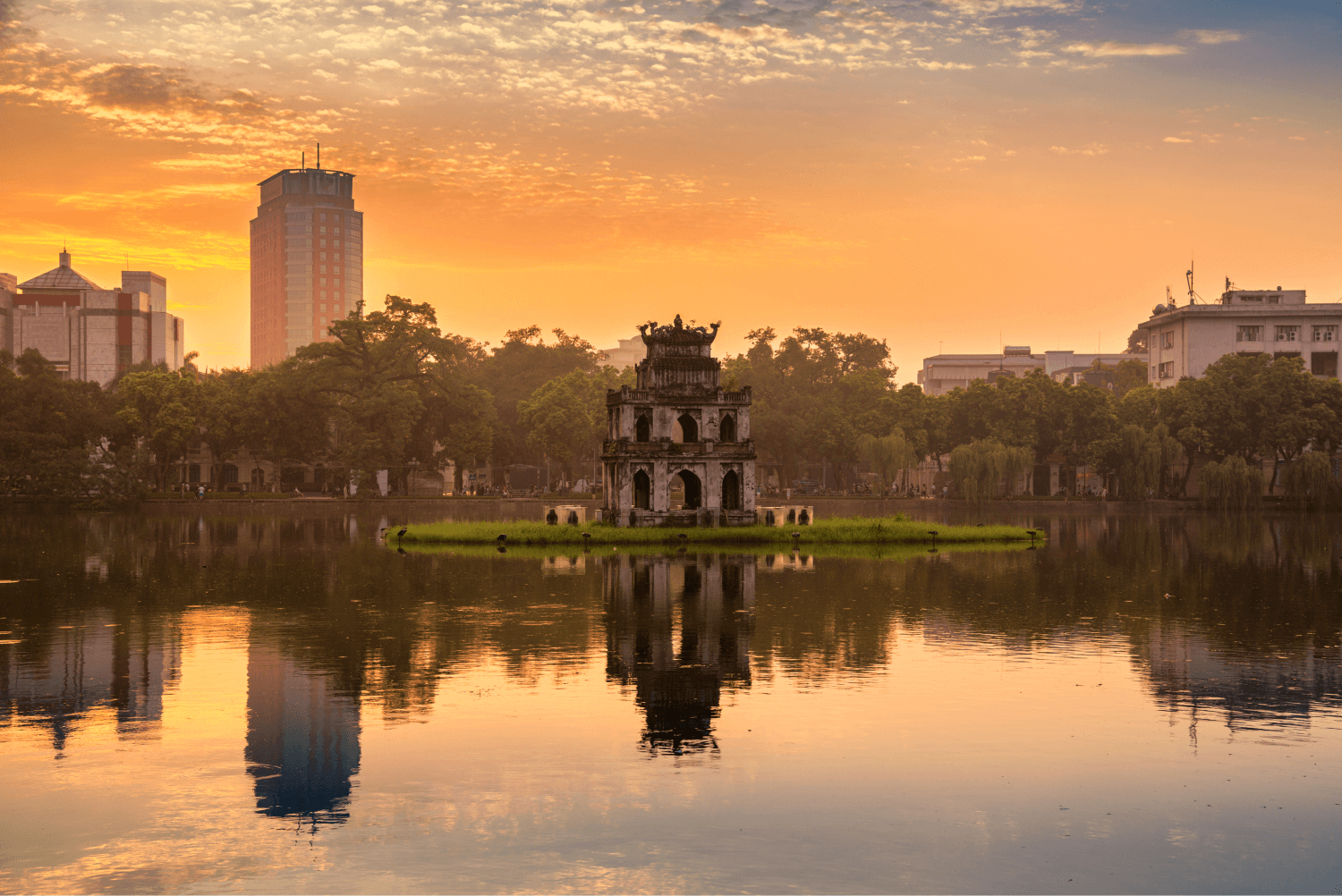
Located directly opposite the main gate, Hồ Văn, also known as Giám Lake or Minh Đường Lake, features a small island called Kim Châu Islet. At its center stands Phán Thủy Pavilion, once a venue for scholarly debates and literary discussions.
Giám Garden, on the western side, is a tranquil space featuring an octagonal pavilion, ornamental plants, ponds, and artistic landscapes—ideal for relaxation and cultural events.
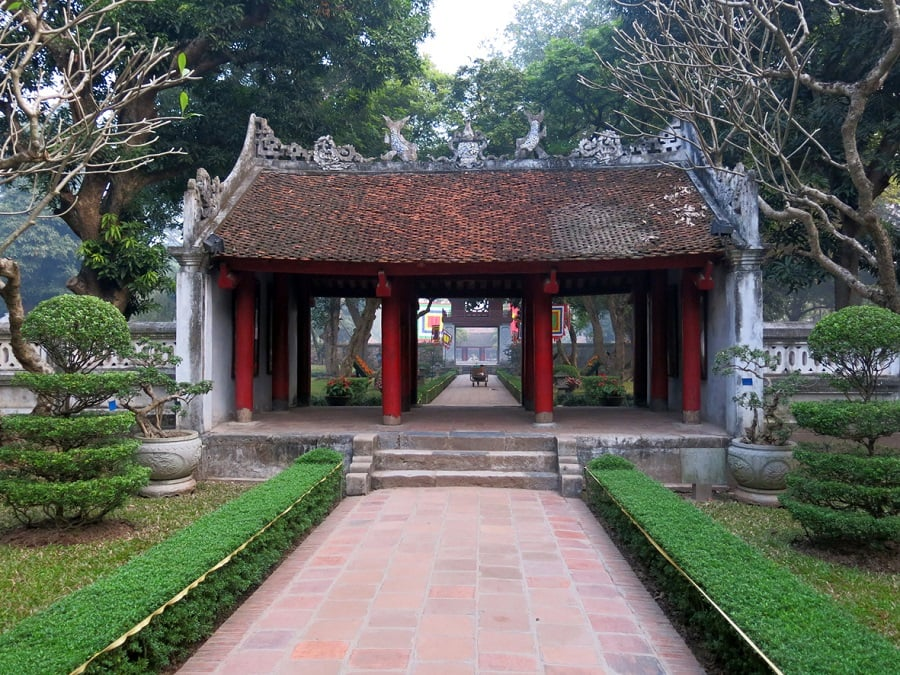
The second main gate, Đại Trung Gate, consists of three sections built on a raised brick platform, topped with traditional curved roof tiles. The surrounding open space, lined with trees, paths, and ponds, creates a peaceful atmosphere rarely found in the bustling city center.
Built in 1805 under the Nguyễn Dynasty by Governor Nguyễn Văn Thành, Khuê Văn Pavilion is one of Hanoi’s most recognizable symbols.
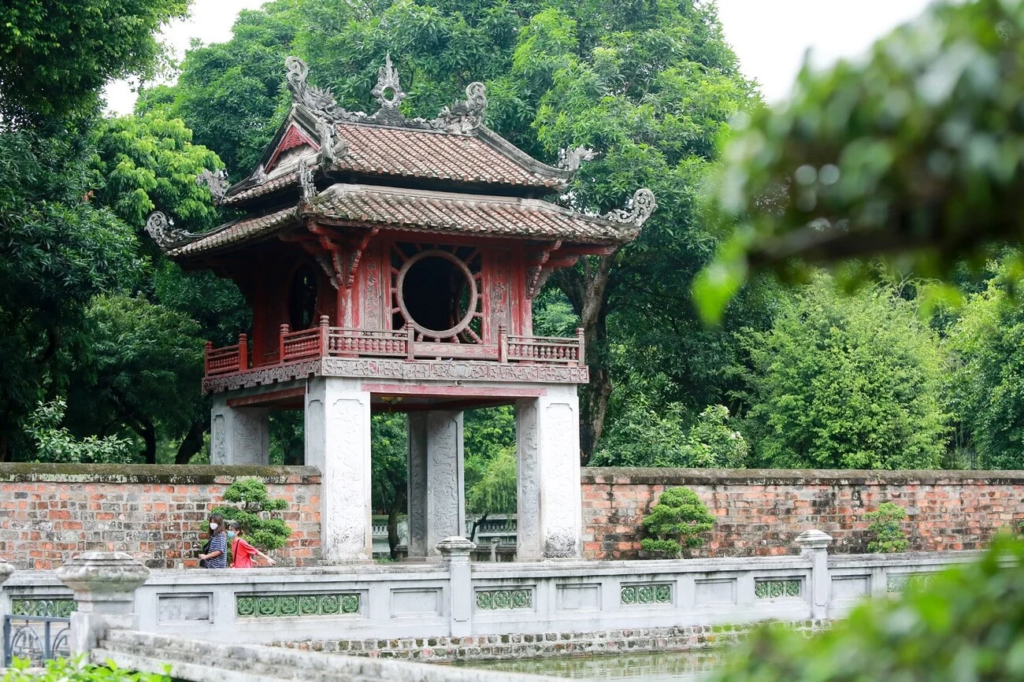
This two-story structure stands nearly nine meters tall, featuring:
The circular windows resemble the Khuê star, symbolizing brilliance, knowledge, and scholarly success.
The Doctoral Stele Garden houses 82 stone steles, each mounted on a stone turtle, recording the names and achievements of doctoral laureates across various dynasties.
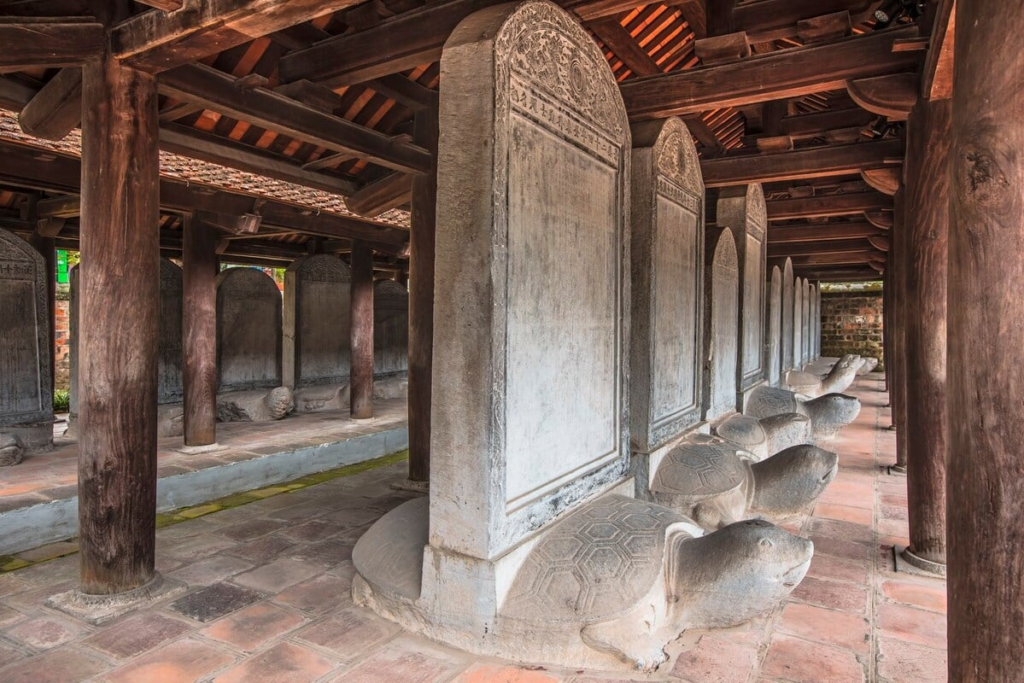
On March 9, 2010, these steles were recognized by UNESCO as World Documentary Heritage.
Adjacent to the steles lies Thiên Quang Well, a square-shaped pond symbolizing the earth and believed to gather the essence of the universe, illuminating human knowledge.
Located at the rear of the complex, Khải Thánh Temple is dedicated to the parents of Confucius—Shuliang He and Yan Zhengzai.
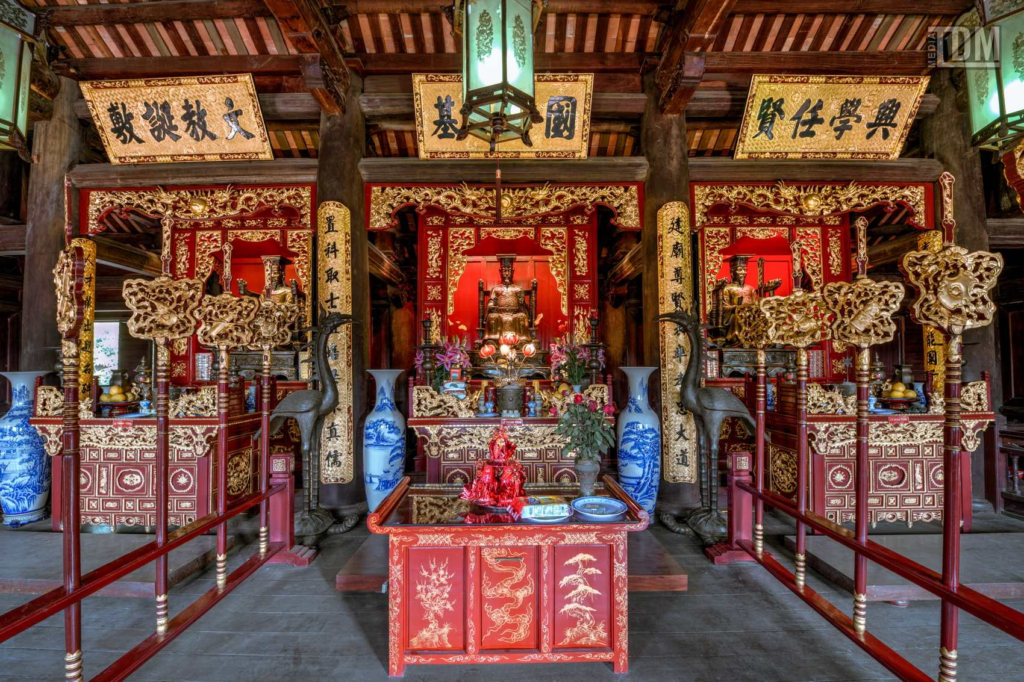
Historically, this area once served as a residential zone with 150 rooms for students. It was completely destroyed in 1946 during wartime and later reconstructed, preserving its sacred atmosphere to this day.
Rebuilt in 2000, Thái Học House follows traditional architectural styles using baked tiles, wood, and bricks.
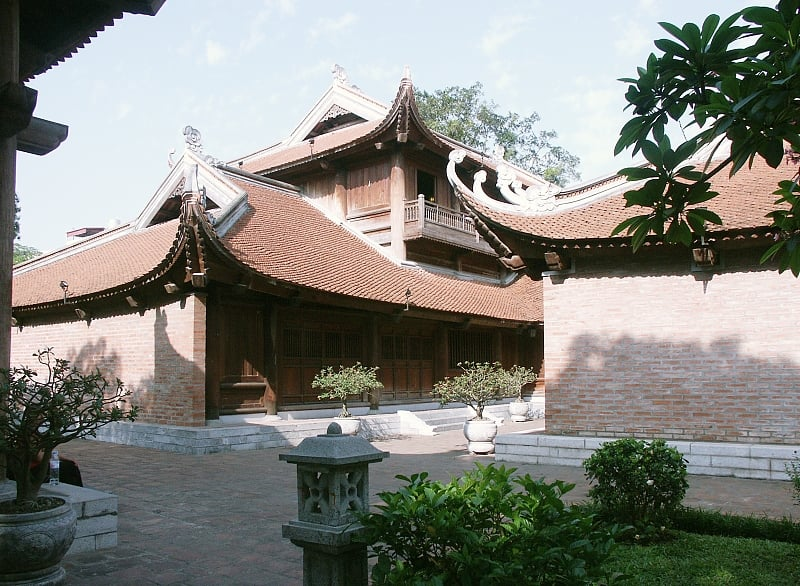
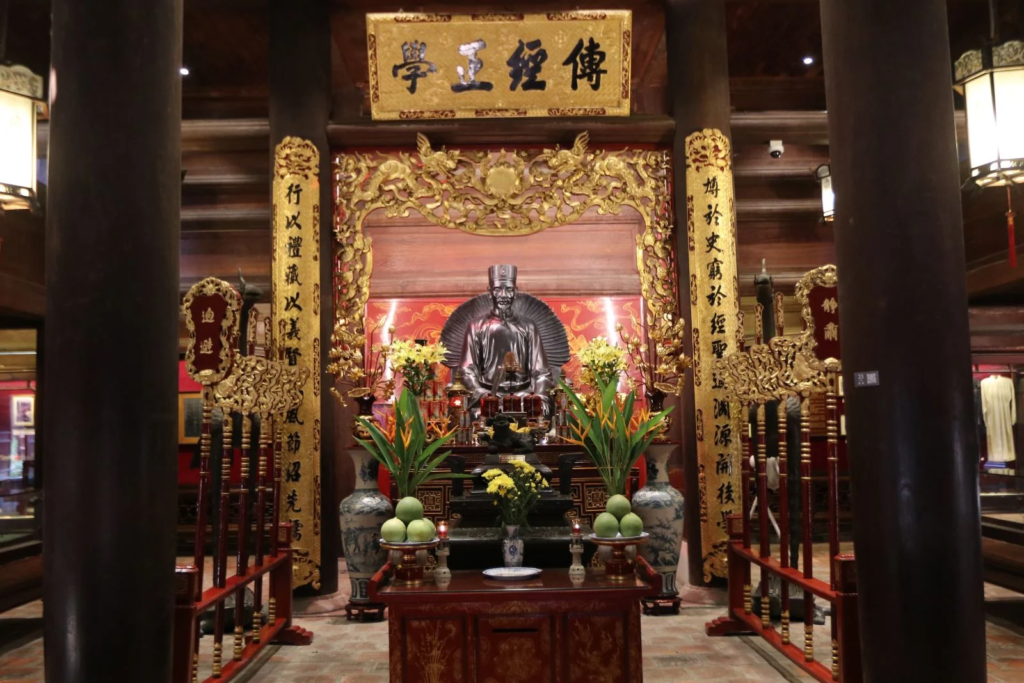
As the fourth main space, Đại Thành Shrine is the spiritual heart of the complex. It consists of nine compartments, enclosed on three sides, and serves as the place of worship for Confucius, the Ten Philosophers, and the Four Associates.
Walking through the Temple of Literature is like retracing the footsteps of scholars from centuries past. From the solemn main gate to the iconic Khuê Văn Pavilion, the doctoral steles, Thiên Quang Well, and Thái Học Courtyard, visitors gain a comprehensive understanding of Vietnam’s scholarly tradition and reverence for learning.
Today, the Temple of Literature is a popular cultural destination, especially during Lunar New Year:
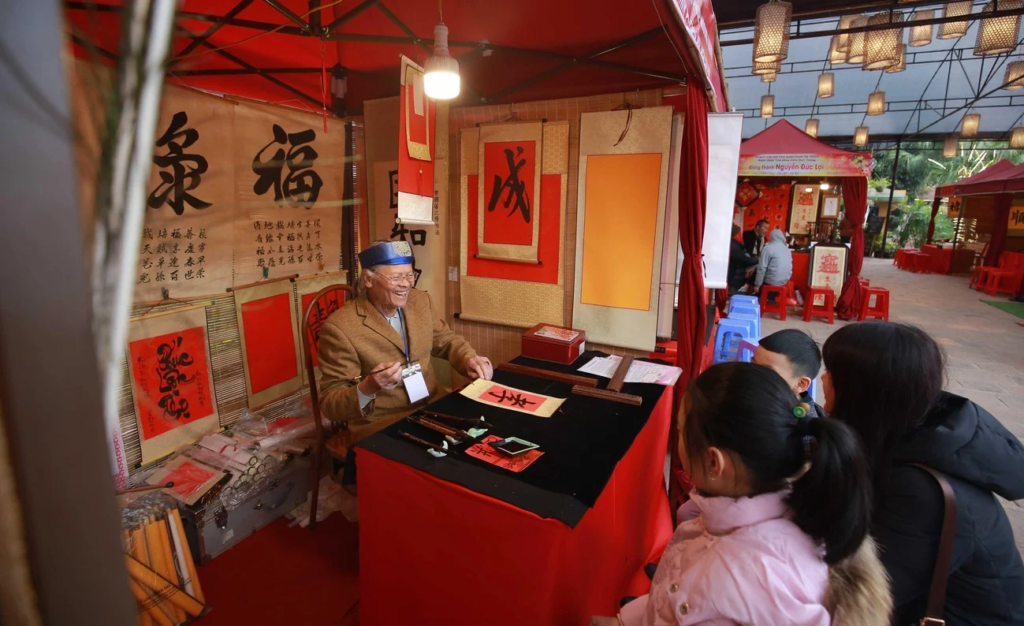
The Temple of Literature Night Tour offers a deeply immersive experience through lighting, sound, and interactive activities such as folk games and storytelling by stone steles.
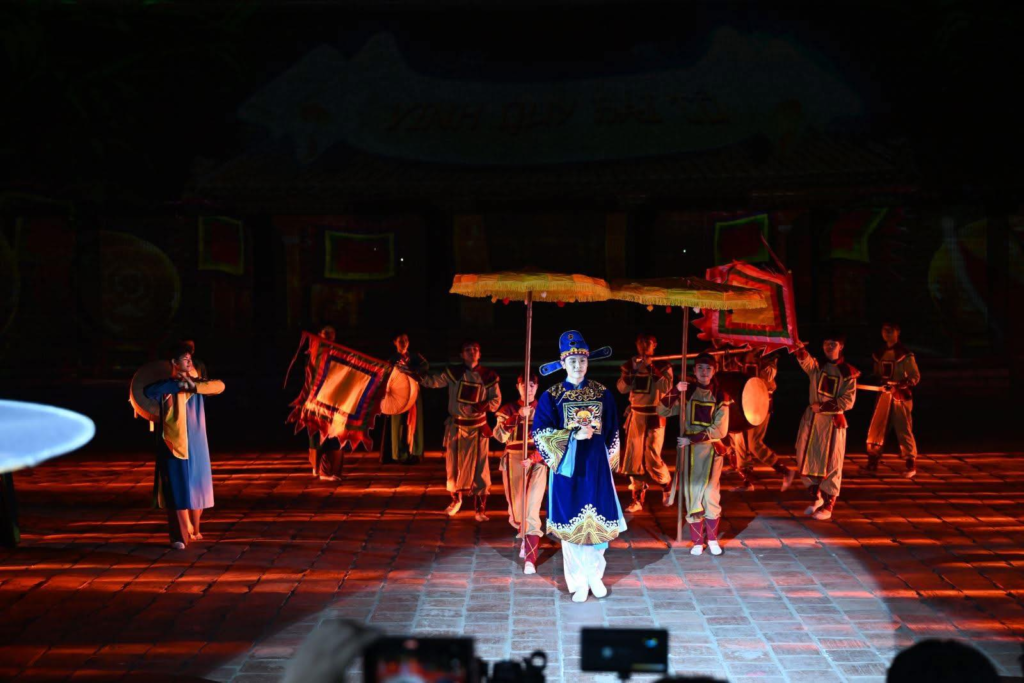
The highlight is the 3D Mapping Show “The Essence of Confucian Learning”, celebrating Vietnam’s respect for teachers, education, and talent.
Night Tour Details:
The Temple of Literature – Imperial Academy is far more than a historical monument—it is the spiritual cradle of Vietnamese education and intellectual values. Through centuries of transformation, wars, and restoration, the site continues to honor knowledge, morality, and academic excellence. For international visitors seeking to understand Vietnam beyond its modern vibrancy, this timeless complex offers a profound glimpse into the country’s cultural soul and enduring respect for learning.
4 hours
$59.85 $63.00

4 hours
$55.25 $65.00
4 hours
$33.25 $35.00
4 hours
$33.25 $35.00
4 hours
$33.25 $35.00
4 hours
$30.40 $32.00
4 hours
$46.55 $49.00
4 hours
$29.45 $31.00
12 hours
$40.50 $45.00
7.5 hours
$29.75 $35.00

10 hours
$58.65 $69.00

6.5 hours
$29.75 $35.00
9 hours
$50.15 $59.00
9 hours
$55.25 $65.00
10 hours
$58.65 $69.00
48 hours
$503.20 $592.00

8 hours
$38.25 $45.00

9 hours
$60.30 $67.00

9 hours
$60.30 $67.00
12 hours
$40.50 $45.00
8 hours
$66.60 $74.00
10 hours
$58.65 $69.00
4 hours
$55.25 $65.00

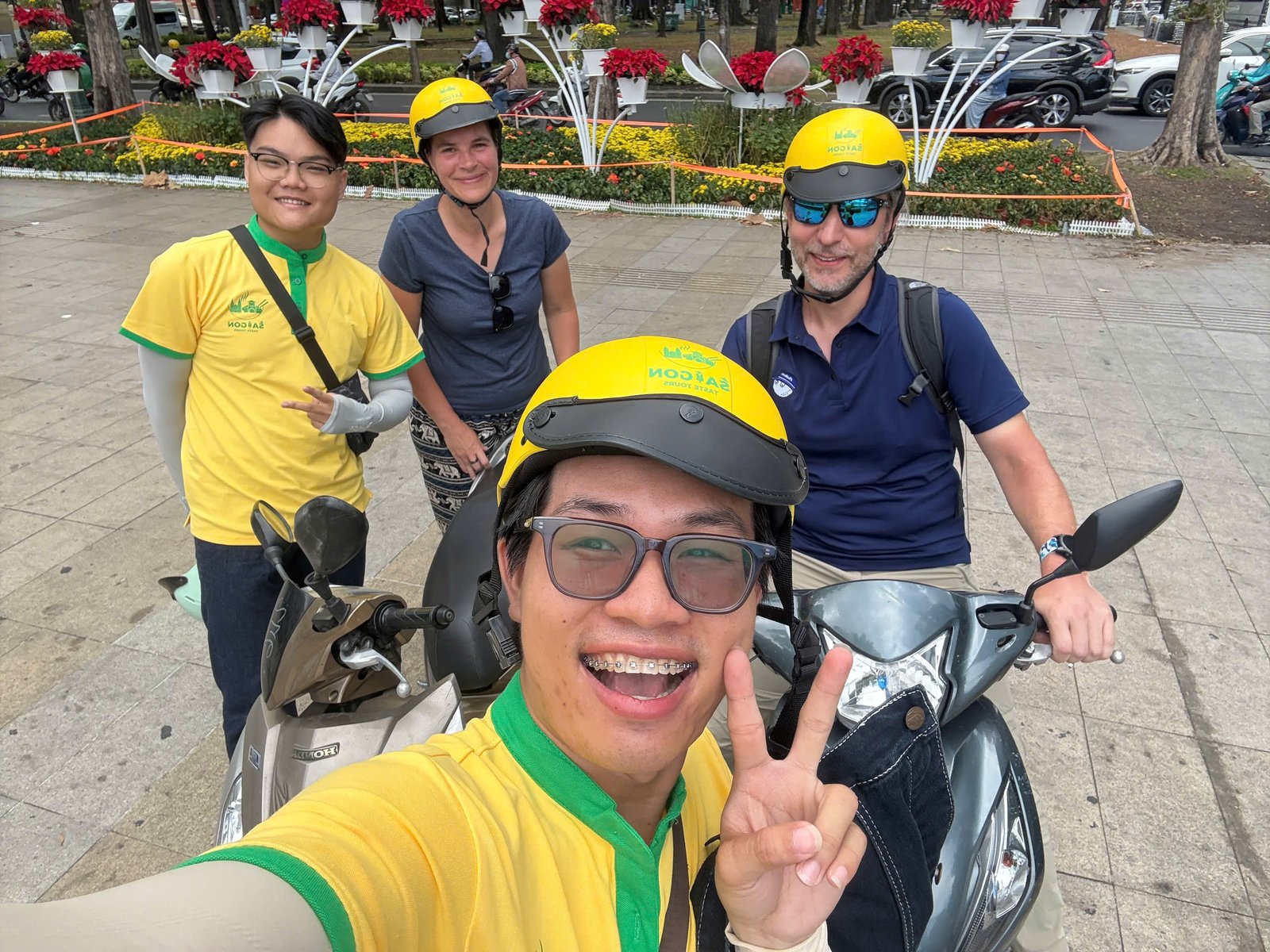
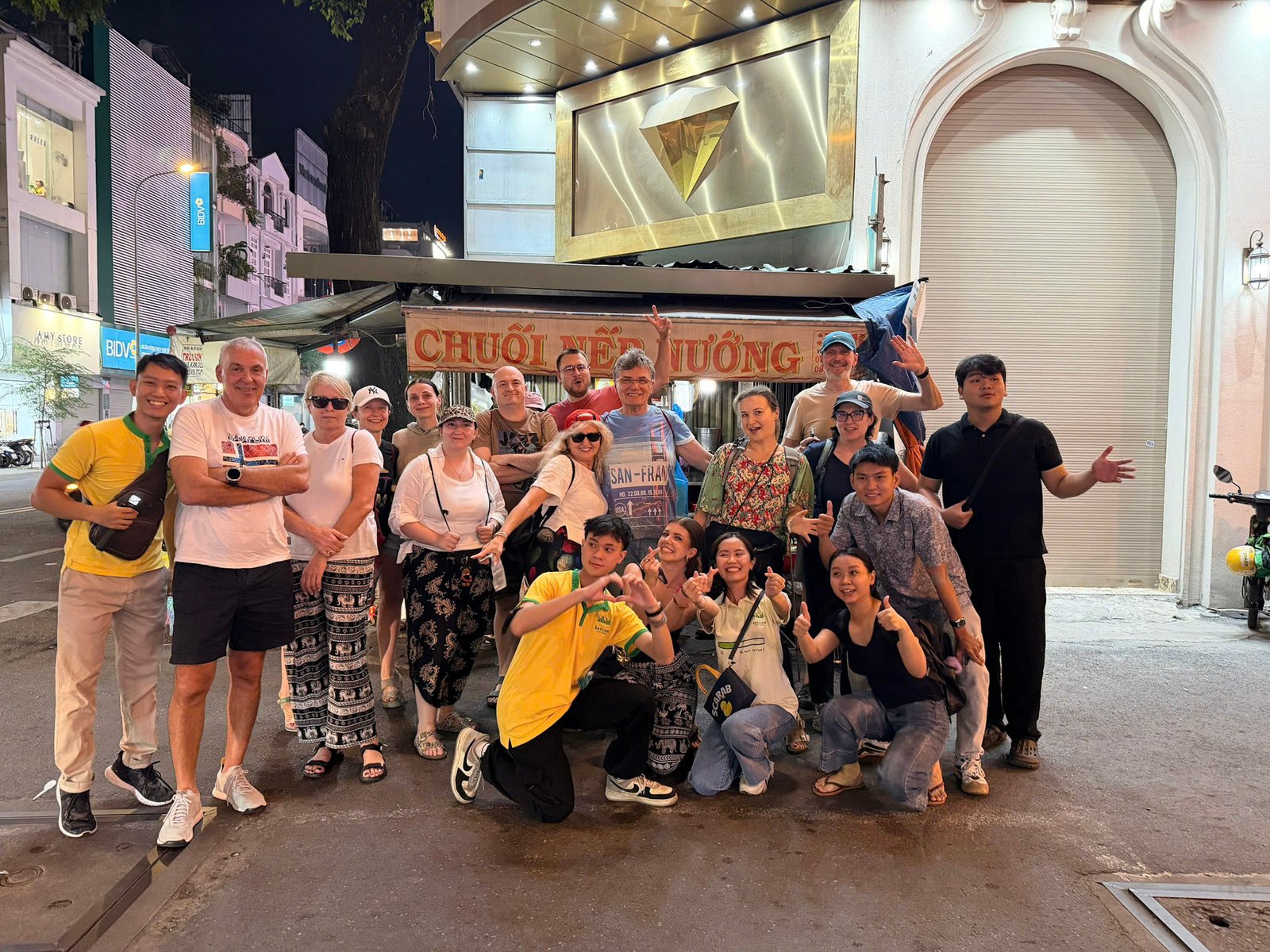
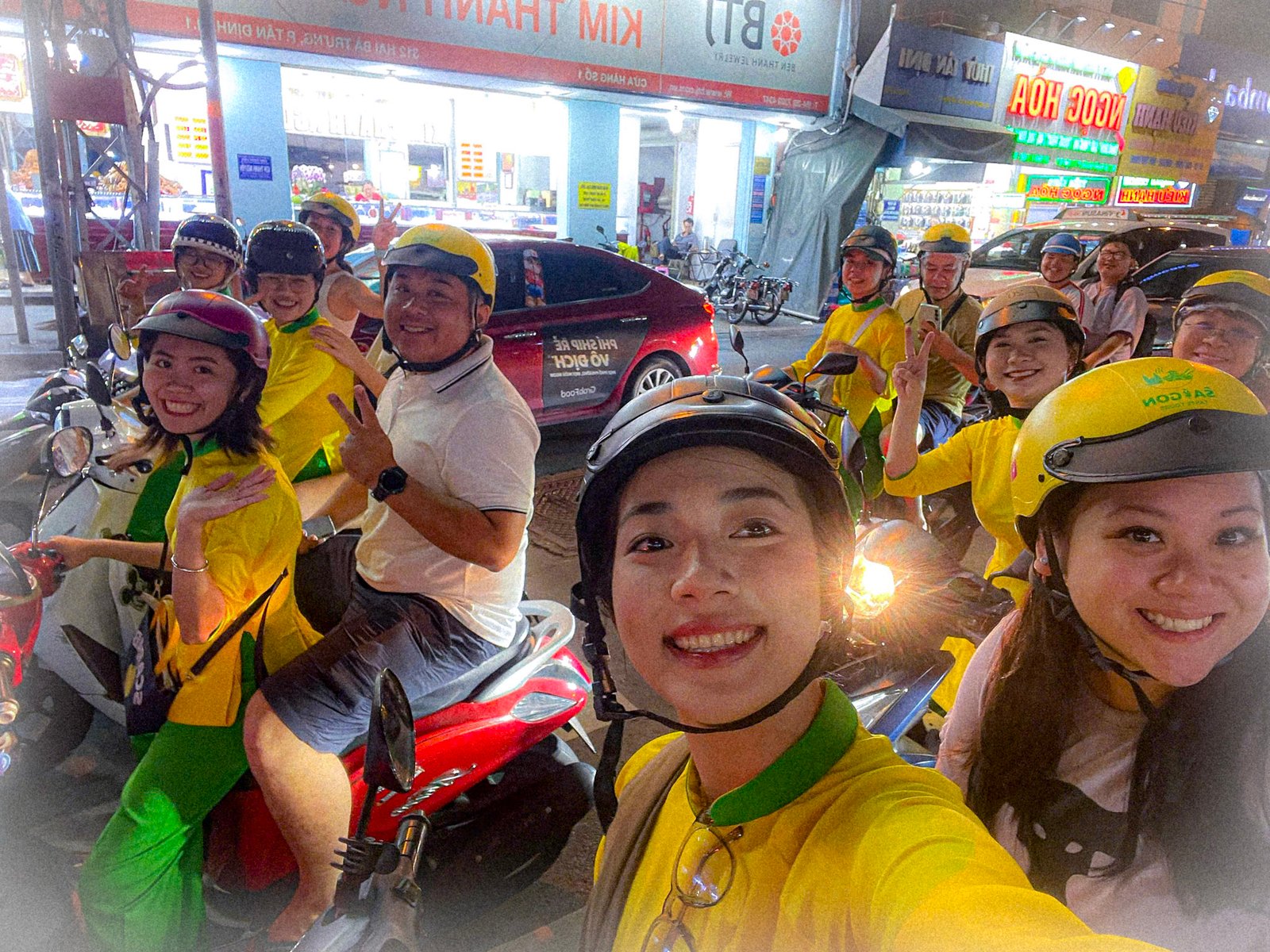
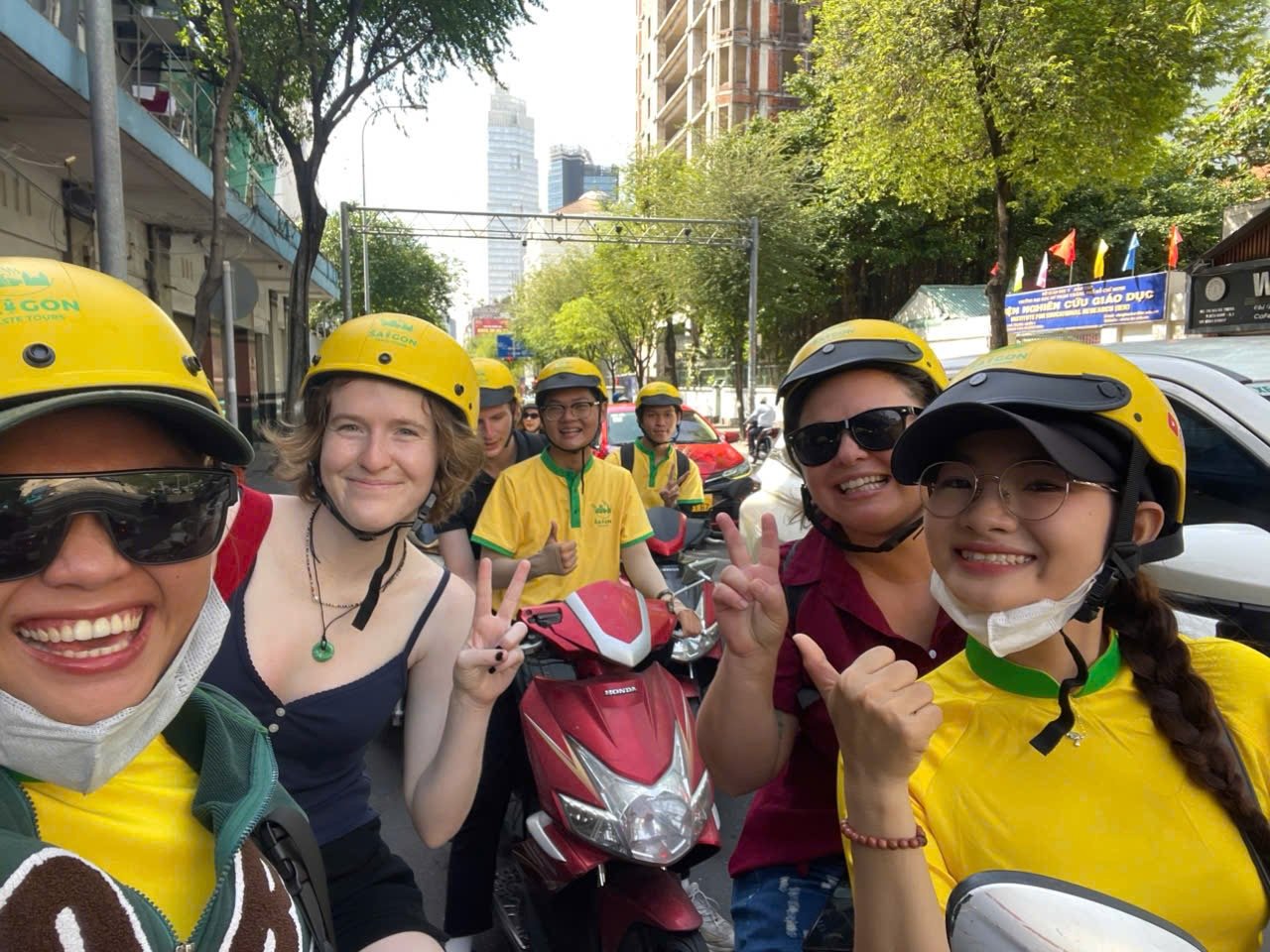
Welcome to SAIGON TASTE Tours! We’re a team of passionate local guides dedicated to sharing the real Saigon and Vietnam through food, culture, and hidden gems. From bustling street food stalls and historic landmarks to outdoor adventures and peaceful nature escapes, our tours are designed to be authentic and unforgettable. Every experience is private and tailored to you, guided by knowledgeable locals who go above and beyond to make you feel like you’re exploring with a friend. With us, you won’t just visit Vietnam — you’ll truly experience it. We can’t wait to welcome you! Best regards, Ben and the SAIGON TASTE Tours
saigontastetours@gmail.com Click to Connect with Us
Leave a Reply