
The Ultimate Guide to Saigon’s Coffee Culture: From Hidden Apartments to Vintage ‘Vợt’ Cafes
Discovering the real Saigon, one cup at a time
One of the best ways to understand Saigon is from the back of a motorbike. While many visitors arrive with plans to visit famous landmarks, the city’s true character often reveals itself in quieter moments: sitting on a tiny plastic stool beside a busy street, sipping a glass of iced coffee in a hidden alleyway, or listening to locals chat beneath the shade of old trees. These are the kinds of experiences travelers discover with Saigon Taste Tours, where exploring local neighborhoods often means discovering the stories, flavors, and traditions that shape everyday life in Ho Chi Minh City.
Among those traditions, none may be more important than coffee.
Vietnam is the world’s second-largest coffee producer, but Saigon’s coffee culture goes far beyond agriculture or caffeine. Coffee here is not simply a drink. It is a daily ritual, a social activity, a workspace, a meeting place, and for many locals, an essential part of life. From century-old brewing methods passed down through generations to trendy specialty cafés hidden inside former apartment blocks, Saigon offers one of the most fascinating coffee cultures in Asia.
For travelers willing to look beyond international coffee chains, the city reveals an entire world of unique coffee experiences that cannot be found anywhere else.
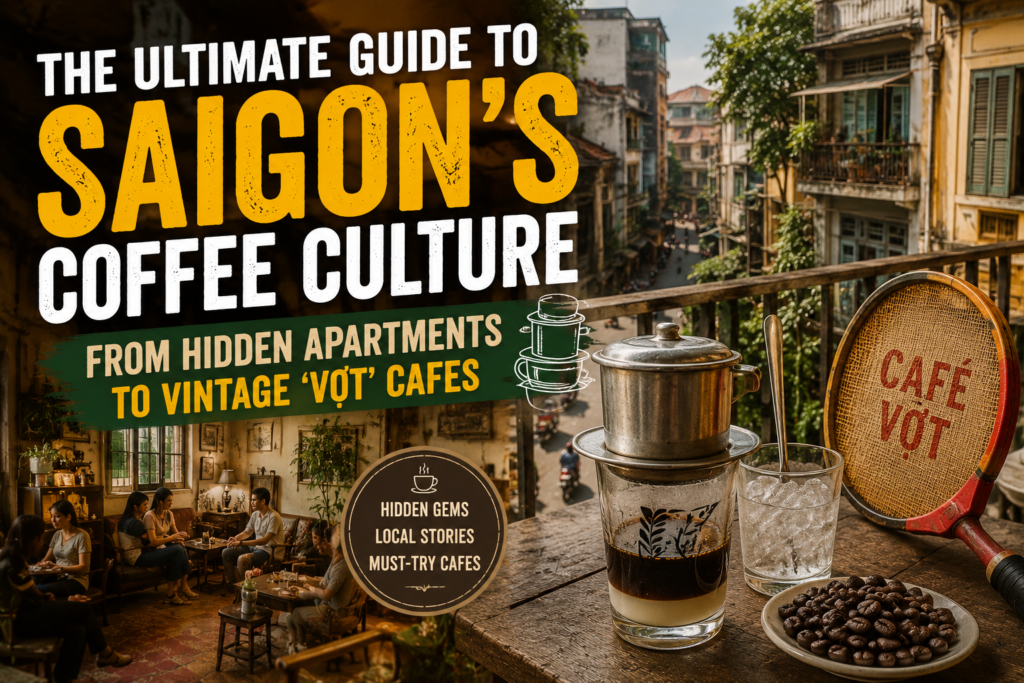
Why coffee is so important in Saigon?
To understand Saigon, it helps to understand the role coffee plays in daily life.
Walk through the city at almost any hour and you will find people drinking coffee. Office workers begin their mornings with strong cà phê đá. Retirees gather at neighborhood cafés to discuss current events. Students spend entire afternoons studying in coffee shops. Friends meet over coffee instead of cocktails. Business deals are negotiated at cafés as often as they are in boardrooms.
Unlike many Western countries where coffee is consumed quickly and often on the move, Vietnamese coffee culture encourages people to slow down. A single cup may last an hour or more. The drink itself is important, but so is the conversation, the atmosphere, and the experience of simply observing the world around you.
This slower approach reflects something deeper about life in Saigon. Despite being one of Southeast Asia’s busiest cities, it remains a place where people still make time to sit, talk, and enjoy simple pleasures.
Coffee provides the perfect excuse to do exactly that.
The story behind Vietnamese coffee
The origins of Vietnamese coffee date back to the French colonial period in the nineteenth century, when coffee plants were introduced to Vietnam. Over time, local farmers adapted cultivation techniques to suit the country’s climate and geography, particularly in the Central Highlands region around Đà Lạt and Buôn Ma Thuột.
As coffee production expanded, Vietnamese people gradually developed their own unique brewing traditions. Fresh milk was often difficult to obtain, leading to the widespread use of sweetened condensed milk. This practical solution eventually became one of the defining characteristics of Vietnamese coffee.
The famous combination of strong dark coffee and condensed milk remains one of the country’s most recognizable beverages today.
Yet coffee culture in Saigon continues to evolve. Traditional brewing methods coexist alongside modern espresso machines, pour-over techniques, and specialty coffee roasters. Rather than replacing one another, these different styles create a coffee scene that feels both deeply rooted in history and constantly changing.

Hidden apartment cafés: Saigon’s creative coffee revolution
One of the most unique aspects of Saigon’s coffee culture can be found inside its old apartment buildings.
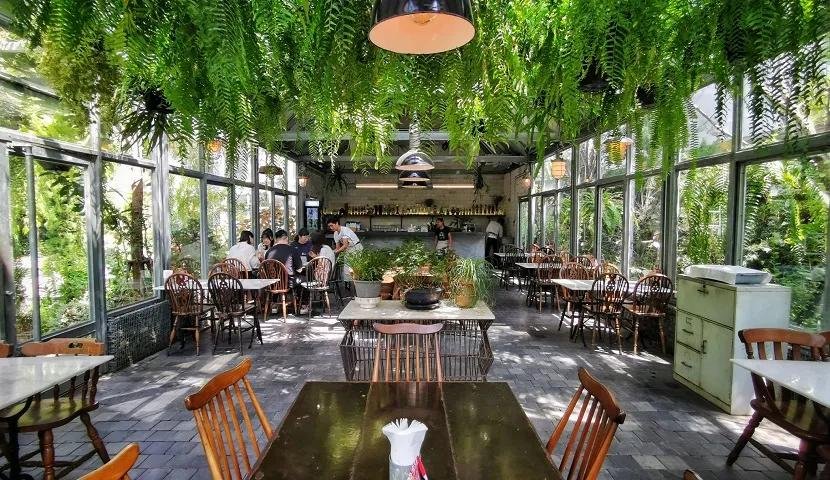
Visitors exploring central districts often notice aging residential blocks that appear ordinary from the outside. Yet behind weathered facades and narrow staircases lies an entirely different world. Former apartments have been transformed into cafés, art spaces, bookstores, and creative studios.
The most famous example is the apartment complex overlooking Nguyễn Huệ Walking Street. What once served as a residential building has evolved into one of the city’s most iconic creative spaces.
Each floor reveals something different. A hidden café decorated with vintage furniture. A minimalist specialty coffee bar. A quiet balcony overlooking the city below. A small studio filled with local artwork.
Part of the appeal lies in the sense of discovery. Unlike cafés located directly on busy streets, apartment cafés often feel hidden from the outside world. Finding them requires curiosity and a willingness to explore.
For many travelers, discovering these spaces becomes one of the most memorable parts of experiencing modern Saigon.
The timeless charm of cà phê vợt
Long before specialty coffee arrived in Vietnam, another brewing tradition was already thriving in the city.
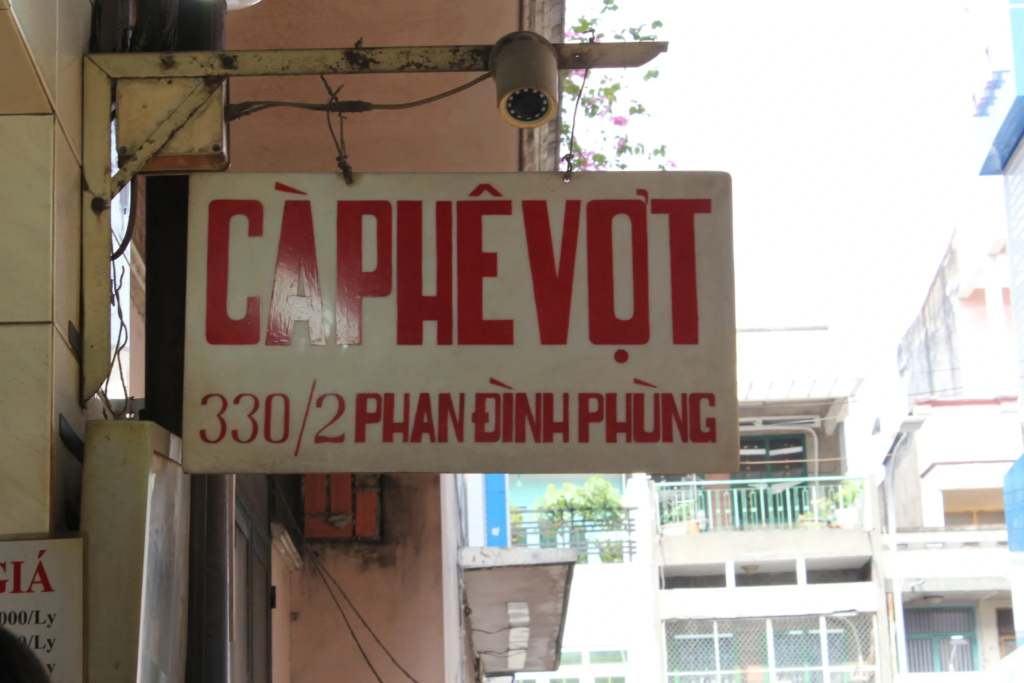
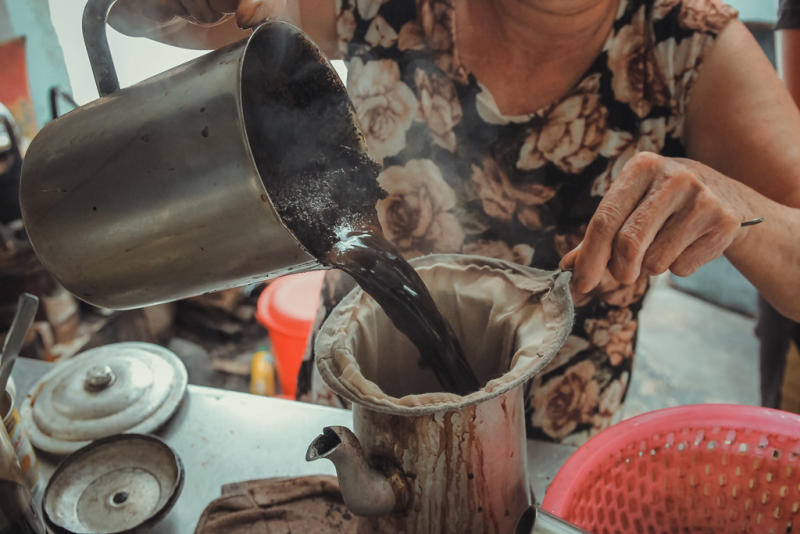
Known as cà phê vợt, or “sock coffee,” this method uses a cloth filter resembling a small sock to brew coffee slowly over time. The technique dates back decades and remains closely associated with the Chinese-Vietnamese communities of Chợ Lớn.
Stepping into a traditional cà phê vợt shop feels like traveling back in time. Many of these establishments have operated for generations, preserving recipes, equipment, and atmospheres that have changed remarkably little over the years.
The coffee itself differs from modern specialty brews. It tends to be smoother, lighter, and less intense than coffee prepared using a phin filter. The brewing process emphasizes balance and drinkability rather than bold strength.
Yet what makes cà phê vợt truly special is not simply the flavor. It is the cultural experience. Sitting inside one of these historic cafés allows visitors to glimpse a side of Saigon that existed long before skyscrapers, social media, and contemporary coffee trends.
These cafés serve as living museums of the city’s coffee heritage.
Sidewalk coffee and the soul of the city
While apartment cafés attract younger crowds and cà phê vợt preserves history, perhaps the most authentic coffee experience in Saigon remains the humble sidewalk café.
Every morning, thousands of small plastic stools appear along sidewalks throughout the city. Local residents gather before work, discussing politics, sports, business, and daily life while sipping strong coffee over ice.
The setup is often remarkably simple. A few chairs. A small cart. Coffee brewed using traditional methods. Yet these modest spaces play an important role in community life.
For travelers, sitting at a sidewalk café offers an unparalleled opportunity to observe the rhythms of Saigon. Motorbikes stream past in endless waves. Vendors push carts through narrow streets. Neighbors greet one another. Conversations flow naturally around you.
Unlike tourist attractions that present a curated version of local culture, sidewalk cafés reveal everyday life exactly as it is.
This authenticity is what keeps many visitors returning.
The rise of specialty coffee in Saigon
In recent years, Saigon has emerged as one of Southeast Asia’s most exciting specialty coffee destinations.
A new generation of Vietnamese roasters, baristas, and café owners has begun exploring the possibilities of locally grown coffee with fresh enthusiasm. Instead of focusing solely on traditional preparations, these entrepreneurs experiment with roasting profiles, brewing methods, and direct sourcing relationships with farmers.
The result is a thriving specialty coffee scene that continues to gain international recognition.
Modern cafés now serve everything from espresso-based drinks and pour-overs to innovative beverages that incorporate tropical fruits, local ingredients, and contemporary culinary techniques.
Interestingly, many specialty cafés embrace rather than reject Vietnamese coffee traditions. Rather than imitating foreign trends, they seek to reinterpret local flavors through a modern lens.
This balance between innovation and heritage helps explain why Saigon’s coffee scene feels so dynamic today.
More than a drink: Coffee as a social experience
What ultimately makes Saigon’s coffee culture unique is not the brewing method, the beans, or even the cafés themselves.
It is the role coffee plays in bringing people together.
Coffee functions as a social connector throughout the city. Friends meet over coffee. Families gather over coffee. Colleagues brainstorm over coffee. Students study over coffee. Couples spend entire evenings talking over coffee.
Unlike nightlife centered around alcohol, Saigon’s coffee culture feels remarkably inclusive. People of all ages participate. A traditional sidewalk café may host retirees discussing local news, while a modern specialty café welcomes young entrepreneurs working on creative projects.
The settings differ, but the underlying purpose remains the same.
Coffee creates spaces where people connect.
What every traveler should try?
No exploration of Saigon’s coffee culture would be complete without sampling a few iconic drinks.
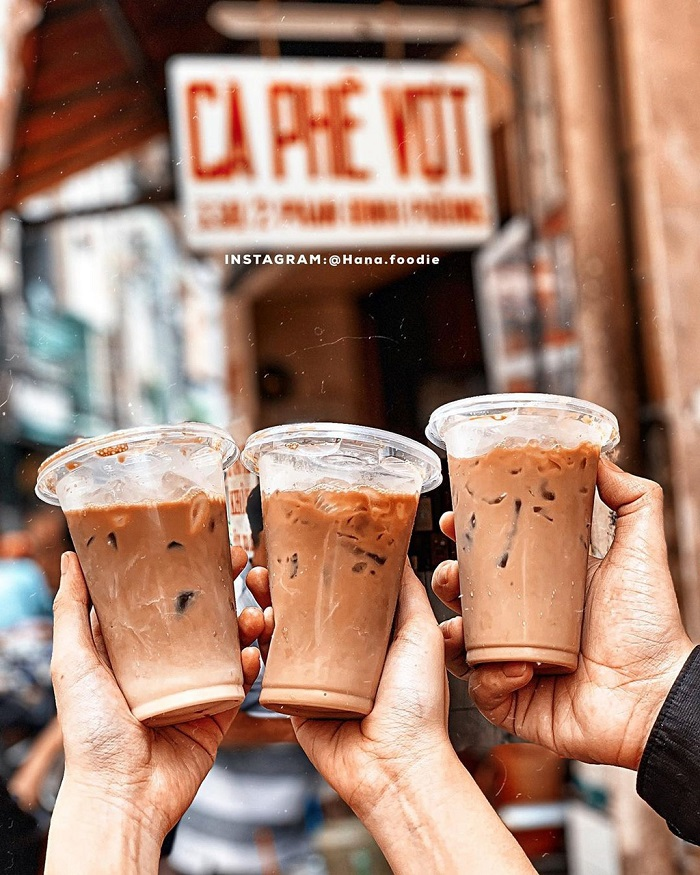
Cà phê sữa đá remains the classic choice. Strong coffee combined with sweetened condensed milk and ice creates a bold yet balanced flavor profile that has become synonymous with Vietnam itself.
Cà phê đen đá offers a stronger, less sweet alternative that many locals prefer. Coconut coffee introduces a tropical twist, while egg coffee, although more commonly associated with Hanoi, can also be found in selected cafés throughout Saigon.
Each drink tells part of the story of how Vietnamese coffee evolved into one of the world’s most distinctive coffee traditions.
Final thoughts
Saigon’s coffee culture is impossible to understand through a single café visit.
It lives in hidden apartments overlooking bustling streets. It survives inside century-old cà phê vợt shops tucked away in Chợ Lớn. It thrives on sidewalks filled with plastic stools and endless conversation. It evolves inside modern specialty cafés pushing the boundaries of Vietnamese coffee.
Together, these experiences create a coffee culture unlike any other in the world.
For travelers, exploring Saigon through its cafés offers far more than good coffee. It provides a window into the city’s history, creativity, traditions, and everyday life.
And perhaps that is why so many visitors arrive expecting to drink coffee, but leave feeling as though they have learned something meaningful about Saigon itself.
Experience Saigon beyond the coffee cup
Coffee is only one part of Saigon’s rich local culture. Beyond the cafés, the city is filled with hidden food stalls, bustling markets, fascinating neighborhoods, and stories waiting to be discovered.
Join Saigon Taste Tours and explore Ho Chi Minh City like a local from the back of a motorbike. Taste authentic Vietnamese dishes, uncover hidden corners of the city, and experience the vibrant culture that makes Saigon unforgettable.
Come explore the real Saigon with us – where you don’t just see the city, you taste it.
Discover the city beyond the tourist spots with Saigon Taste Tours. Come explore the real Saigon with us – where you don’t just see the city, you taste it.
For custom itineraries and group bookings, pricing depends on group size. Contact Ben via WhatsApp: +84 383 624 632. If you have any questions, please don’t hesitate to ask.We are looking forward to showing you around our lovely country!
Book your experience today and discover Vietnam like a local!


Saigon Taste Tours team
Welcome to SAIGON TASTE Tours! We’re a team of passionate local guides dedicated to sharing the real Saigon and Vietnam through food, culture, and hidden gems. From bustling street food stalls and historic landmarks to outdoor adventures and peaceful nature escapes, our tours are designed to be authentic and unforgettable. Every experience is private and tailored to you, guided by knowledgeable locals who go above and beyond to make you feel like you’re exploring with a friend. With us, you won’t just visit Vietnam — you’ll truly experience it. We can’t wait to welcome you! Best regards, Ben and the SAIGON TASTE Tours
saigontastetours@gmail.com Click to Connect with Us
Leave a Reply