
Cash vs. Card In Việt Nam: A Practical Guide For International Travelers
Exploring Vietnam like a local starts with understanding daily life
One of the best ways to experience Vietnam is to step beyond the tourist attractions and immerse yourself in everyday local life. Whether you’re weaving through the bustling streets of Ho Chi Minh City on a motorbike food tour with Saigon Taste Tours, enjoying a bowl of noodles at a family-run eatery, or sipping coffee at a hidden apartment café, you’ll quickly discover that daily life in Vietnam often works a little differently than what many international travelers expect.
One of the biggest surprises for first-time visitors involves something surprisingly simple: “How people pay for things?”
Many travelers arrive expecting Vietnam to be largely cash-based, while others assume credit cards are accepted everywhere. The reality lies somewhere in between. Vietnam has undergone a remarkable digital transformation over the past decade, and payment habits have evolved rapidly. Today, visitors will encounter everything from traditional cash transactions and modern contactless payments to QR code systems and e-wallets that have become deeply integrated into daily life.
Understanding when to use cash, when to use cards, and what alternatives are available can make traveling around Vietnam significantly easier.
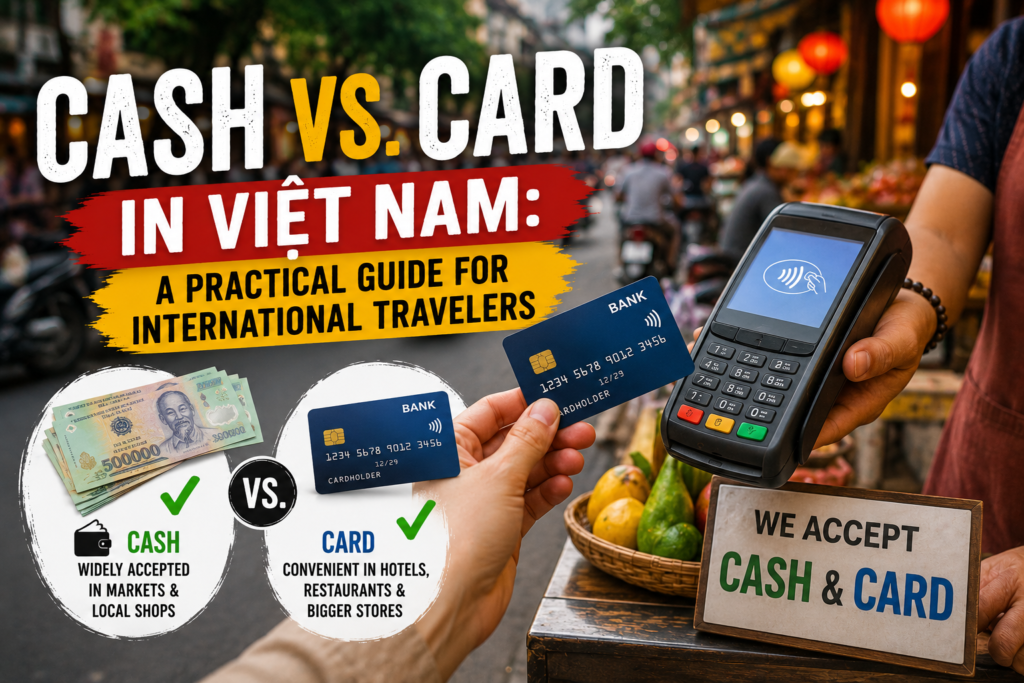
Is Vietnam still a cash-based society?
The short answer is yes – but not entirely.
Cash remains an important part of daily life throughout Vietnam, especially when dealing with small businesses, local markets, street food vendors, family-run cafés, and neighborhood shops. In many situations, cash continues to be the fastest and most convenient payment method.
Walk through any local market in Ho Chi Minh City, Hanoi, or Da Nang, and you’ll see thousands of transactions taking place with Vietnamese đồng. Street food vendors, fruit sellers, motorbike parking attendants, and small convenience stores often prefer cash simply because it is easy and familiar.
However, describing Vietnam as purely cash-based would no longer be accurate.
In major cities, digital payments have become increasingly common. Younger consumers in particular have embraced mobile banking, QR code payments, and e-wallet technology at an impressive rate. The result is a fascinating blend of traditional and modern payment systems existing side by side.
For travelers, this means carrying some cash remains essential, but relying exclusively on cash may no longer be necessary.
Using credit and debit cards in Vietnam
Card acceptance has expanded dramatically across Vietnam in recent years.
Hotels, shopping malls, international restaurants, chain coffee shops, supermarkets, airports, and many tourist-oriented businesses routinely accept major credit cards such as Visa, Mastercard, and increasingly American Express.
Visitors staying in larger cities will find that using a card is often straightforward for larger purchases. Hotel bills, domestic flights, organized tours, and upscale dining experiences can typically be paid electronically without issue.
That said, travelers should not assume cards are accepted everywhere.
Many smaller businesses either do not accept cards or impose minimum spending requirements. Some establishments may also charge additional processing fees for card transactions, particularly at independent businesses.
For this reason, carrying a backup supply of cash remains highly recommended even for travelers who primarily rely on cards.
Why cash is still king for street food and local experiences?
One of the highlights of visiting Vietnam is exploring its incredible street food culture.
Whether you’re enjoying bánh mì from a roadside cart, sampling grilled seafood at a night market, or discovering hidden local eateries, cash remains the preferred payment method in many of these settings.
Street vendors typically operate on narrow profit margins and may not have access to card processing systems. Transactions are often quick, inexpensive, and designed around cash payments.
The same applies to many local experiences that visitors enjoy while exploring Vietnamese cities. Small family-run businesses, traditional markets, independent coffee stalls, and neighborhood services frequently rely on cash as their primary payment method.
Travelers who carry small denominations will find these transactions much smoother and more convenient.
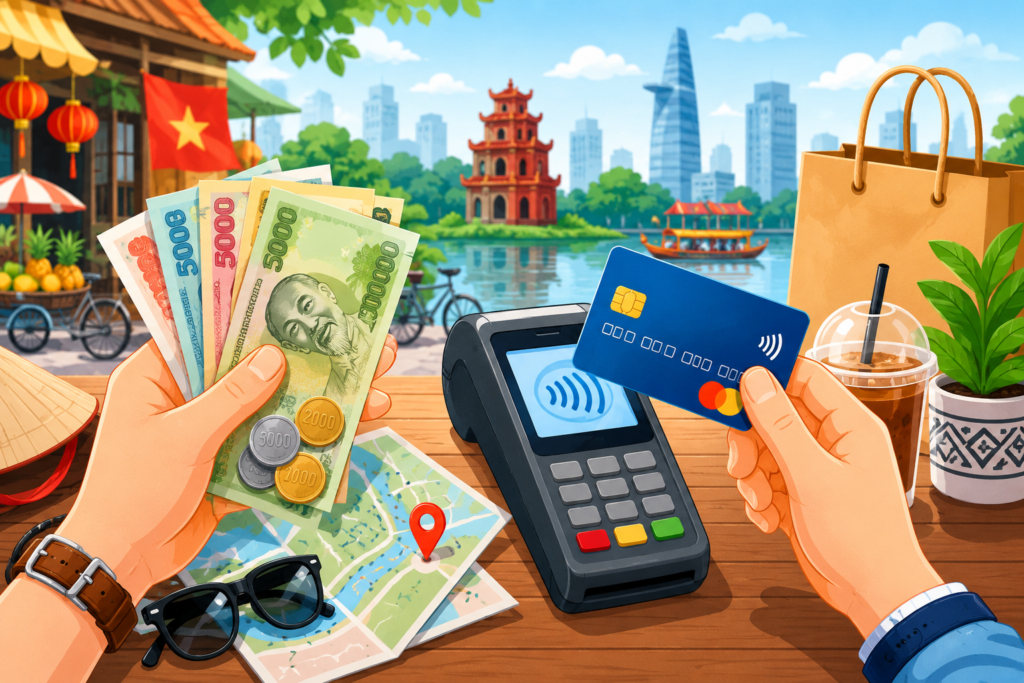
Finding andusing ATMs in Vietnam
Fortunately, accessing cash in Vietnam is generally easy.
ATMs can be found throughout major cities, shopping centers, airports, tourist districts, and even many smaller towns. International debit and credit cards are widely accepted at most major banking networks.
However, there are a few things travelers should keep in mind.
Many Vietnamese ATMs impose withdrawal limits per transaction, which can vary significantly between banks. Foreign card users may also encounter transaction fees from both the local bank and their home financial institution.
Because of these limits, some travelers find themselves making multiple withdrawals during longer trips.
Airport ATMs offer convenience upon arrival, but exchange rates and fees can vary. For this reason, many experienced travelers prefer withdrawing cash from reputable bank-operated ATMs located within city centers.
It’s also wise to notify your bank before traveling to Vietnam to avoid security blocks on overseas transactions.
The rise of QR codes and digital payments
One of the biggest changes in Vietnam’s payment landscape has been the explosion of QR code transactions.
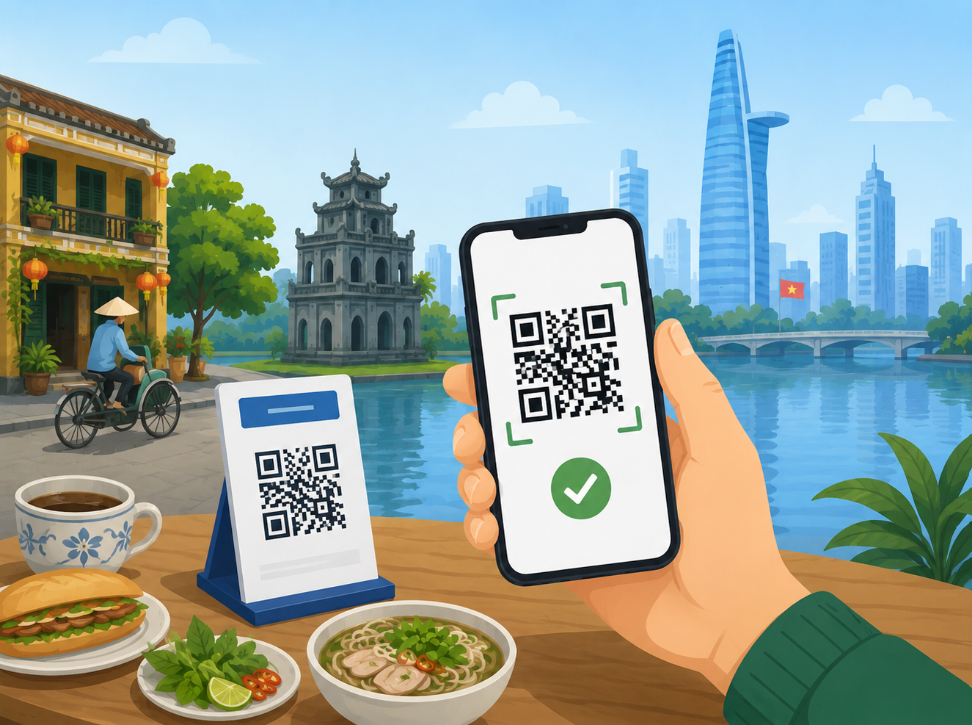
In many cafés, restaurants, convenience stores, and retail shops, customers now simply scan a QR code using their banking app to complete payment instantly.
For local residents, this method has become incredibly popular because it is fast, secure, and eliminates the need to carry large amounts of cash.
Visitors often notice QR codes displayed prominently at cash registers throughout the country.
While these systems are extremely convenient for Vietnamese residents, international travelers may encounter limitations because many QR payment platforms require a local bank account.
Nevertheless, the rapid adoption of QR technology demonstrates just how quickly Vietnam’s payment ecosystem is evolving.
Can foreign tourists use Vietnamese E-wallets?
Vietnam’s e-wallet market has grown rapidly, with services such as MoMo, ZaloPay, and ShopeePay becoming part of everyday life for millions of people.
These platforms are used for everything from ordering food and paying utility bills to purchasing movie tickets and booking transportation.
For international visitors, however, access can be more complicated.
Many Vietnamese e-wallets require local identity verification and connections to domestic bank accounts. As a result, short-term travelers often find it difficult to use these services directly.
That said, some international payment platforms and mobile banking solutions continue to improve compatibility with Vietnamese merchants. As financial technology develops, options for foreign visitors are gradually expanding.
For now, most travelers will find that a combination of cash, international cards, and occasional mobile payment compatibility provides the most practical solution.
Should you exchange currency before arriving?
Many travelers wonder whether they should exchange money before arriving in Vietnam.
While bringing a small amount of local currency can be helpful, it is generally not necessary to exchange large sums in advance. ATMs are widely available, and currency exchange services can be found at airports, banks, and licensed exchange counters throughout the country.
In major tourist destinations, obtaining Vietnamese đồng is usually straightforward.
The key is to avoid carrying excessive amounts of cash at any one time while ensuring you always have enough available for smaller purchases.
A balanced approach tends to work best.
Tipping in Vietnam: Cash or card?
Tipping remains a common source of confusion for first-time visitors.
Unlike countries where tipping is expected for most services, Vietnam traditionally has not operated on a strong tipping culture. However, tourism has gradually influenced certain sectors of the economy.
Tour guides, private drivers, hotel staff, and service professionals in tourism-related industries may receive tips from international guests as a gesture of appreciation.
When tipping does occur, cash is generally preferred.
Even in establishments that accept card payments, tip processing systems are not always structured in the same way as those found in North America or Europe. Handing a tip directly to the individual providing the service remains the most common approach.
Ultimately, tipping in Vietnam is appreciated but rarely mandatory.
Safety tips for managing money in Vietnam
Vietnam is generally considered a safe destination for travelers, but basic financial precautions remain important.
Using ATMs located inside banks or shopping centers can provide added security. Keeping small denominations accessible for everyday purchases reduces the need to display large amounts of cash. Separating cards and cash into different locations can also minimize inconvenience if something is lost.
Contactless payments and digital banking tools provide additional layers of security when available, but maintaining access to multiple payment methods is always a wise strategy.
Flexibility remains one of the best ways to avoid unexpected problems during your trip.
So, cash or card: Which should you use?
The truth is that the most effective approach in Vietnam is not choosing one over the other.
Cash and cards complement each other.
Cards work exceptionally well for hotels, larger restaurants, shopping centers, and major travel expenses. Cash remains essential for street food, local markets, small businesses, transportation services, and many authentic local experiences.
Meanwhile, Vietnam’s growing digital payment ecosystem continues to bridge the gap between these two worlds.
Travelers who arrive prepared to use a combination of payment methods will enjoy the greatest convenience and flexibility throughout their journey.
Final thoughts
Vietnam’s payment landscape is changing rapidly, reflecting the country’s broader economic and technological transformation. While cash remains deeply embedded in daily life, card acceptance and digital payments have expanded dramatically in recent years.
For international travelers, the best strategy is simple: carry some cash, keep a reliable credit or debit card available, and stay open to the evolving digital payment options you’ll encounter along the way.
By understanding how money moves through modern Vietnam, you’ll spend less time worrying about payments and more time enjoying the incredible experiences that make the country such a rewarding destination.
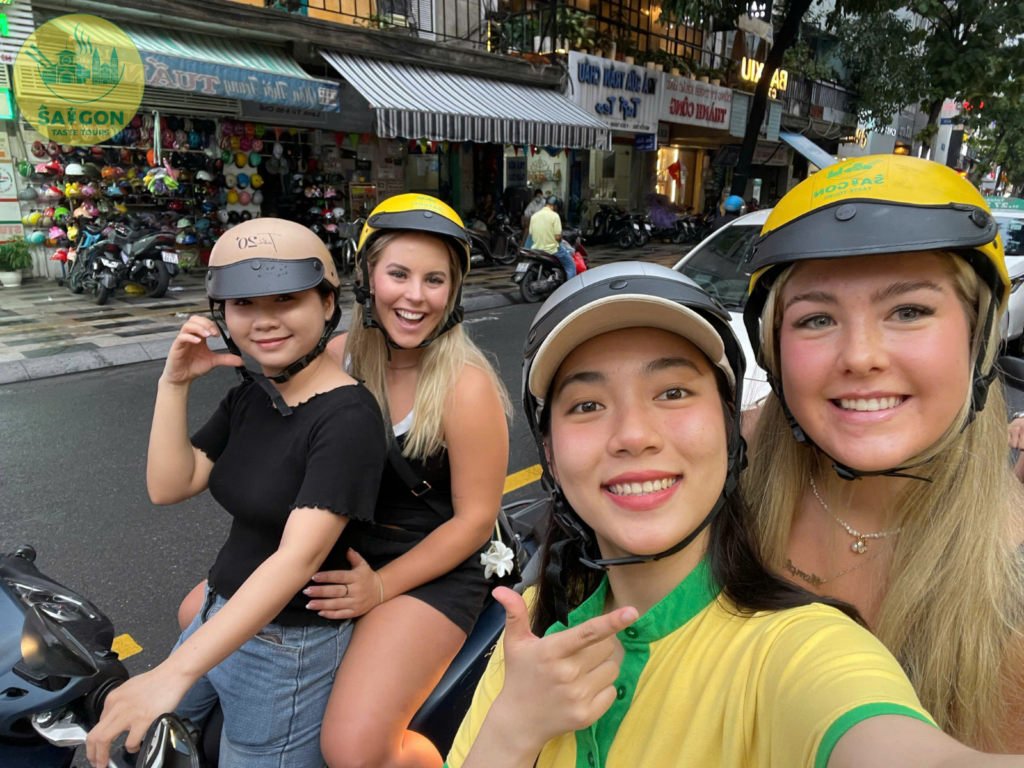
Experience the real Vietnam beyond the tourist trail
Understanding how locals pay for coffee, street food, and everyday purchases is just one small part of experiencing authentic Vietnam.
With Saigon Taste Tours, you’ll explore hidden neighborhoods, discover incredible local cuisine, and gain firsthand insight into the daily life and culture that shape modern Ho Chi Minh City. Traveling by motorbike allows you to see a side of Saigon that most visitors never experience, from bustling markets and local eateries to fascinating stories behind the city’s vibrant streets.
Come explore the real Saigon with us – where you don’t just see the city, you taste it.
👉 Book your motorbike food tour today and discover Saigon like a local.
Discover the city beyond the tourist spots with Saigon Taste Tours. Come explore the real Saigon with us – where you don’t just see the city, you taste it.
For custom itineraries and group bookings, pricing depends on group size. Contact Ben via WhatsApp: +84 383 624 632. If you have any questions, please don’t hesitate to ask.We are looking forward to showing you around our lovely country!
Book your experience today and discover Vietnam like a local!



Saigon Taste Tours team
Welcome to SAIGON TASTE Tours! We’re a team of passionate local guides dedicated to sharing the real Saigon and Vietnam through food, culture, and hidden gems. From bustling street food stalls and historic landmarks to outdoor adventures and peaceful nature escapes, our tours are designed to be authentic and unforgettable. Every experience is private and tailored to you, guided by knowledgeable locals who go above and beyond to make you feel like you’re exploring with a friend. With us, you won’t just visit Vietnam — you’ll truly experience it. We can’t wait to welcome you! Best regards, Ben and the SAIGON TASTE Tours
saigontastetours@gmail.com Click to Connect with Us
Leave a Reply