
Cost of Living in Vietnam (2026 Guide)
Is Vietnam still cheap in 2026 – Or is the “budget Paradise” era over?
For years, Vietnam has been marketed online as one of the cheapest countries in the world to live in. Travel bloggers, YouTubers, and influencers constantly promote the dream lifestyle: luxury apartments, daily café hopping, cheap street food, and tropical living – all supposedly possible on just a few hundred dollars a month.
But in 2026, the reality is becoming far more complicated.
Yes, Vietnam can still be affordable compared to many Western countries. However, the idea that you can comfortably live here on $500 per month, especially in major cities like Hồ Chí Minh City or Hà Nội, is increasingly outdated.
Rising rental prices, inflation, lifestyle expectations, and hidden “foreigner costs” have changed the equation significantly over the last few years. As many expats now admit, Vietnam is no longer the ultra-cheap hidden gem it once was.
So what does it actually cost to live in Vietnam in 2026?
This guide breaks down the real cost of living in Vietnam today, including rent, food, transportation, healthcare, entertainment, visas, and the hidden expenses that many people never talk about before moving here.
Is Vietnam still cheap in 2026?
The short answer is yes, but only if your lifestyle expectations align.
Vietnam remains significantly cheaper than countries like the United States, Canada, Australia, the UK, Singapore, or most of Western Europe. Daily expenses such as local food, transportation, and services are still relatively affordable.
However, the “Vietnam is dirt cheap” narrative becomes misleading once you start seeking comfort, convenience, privacy, or Western-style living standards.
This is the biggest misunderstanding many newcomers face.
Living like a backpacker for a few weeks is completely different from building a long-term life in Vietnam.
Travelers often focus only on cheap bowls of phở or $1 bánh mì, but long-term residents quickly discover additional realities:
- Modern apartments in desirable neighborhoods are no longer extremely cheap
- Imported groceries can be surprisingly expensive
- International healthcare costs add up quickly
- Visa runs and legal paperwork create recurring expenses
- Western nightlife and café culture can easily destroy a budget
In other words, Vietnam is affordable, but not magically cheap anymore.
Average monthly cost of living in Vietnam (2026)
The amount you spend in Vietnam depends heavily on your lifestyle, city, and housing expectations.
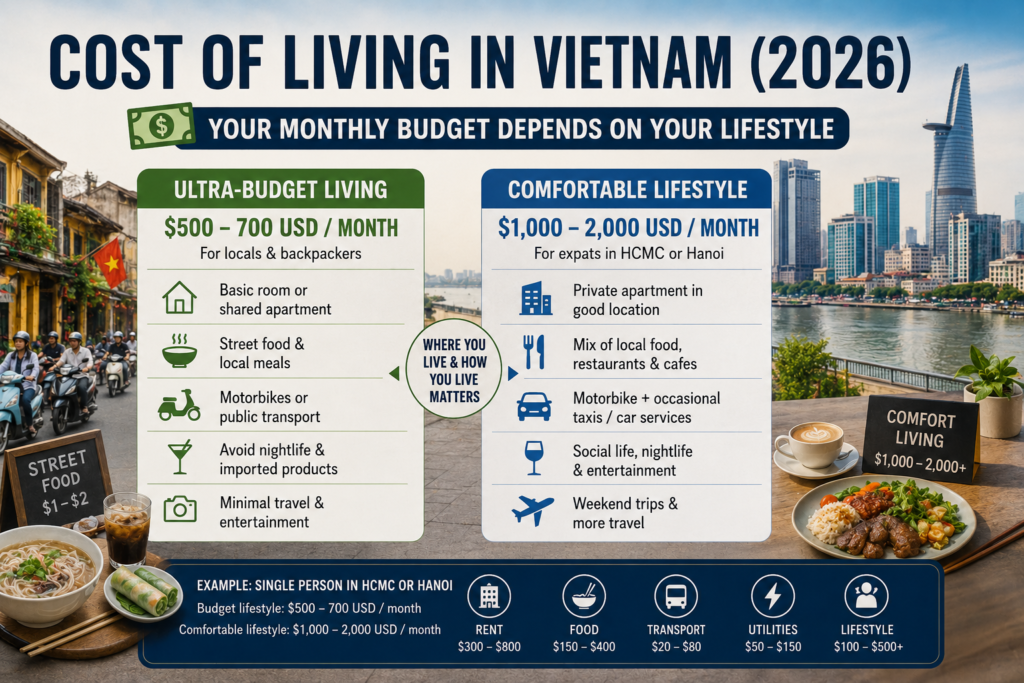
For ultra-budget living, some locals and backpackers still survive on around $500-700 USD per month. But this usually involves:
- Renting a basic local room or shared apartment
- Eating mostly Vietnamese street food
- Avoiding nightlife and imported products
- Using motorbikes or public transport exclusively
- Minimal travel and entertainment
For most expats wanting a comfortable lifestyle, the realistic number is now much higher.
A single person living comfortably in Hồ Chí Minh City or Hà Nội in 2026 will typically spend between $1,000–2,000 USD per month depending on neighborhood and lifestyle choices. Couples often spend around $1,800–3,000 USD monthly for a more balanced middle-class expat lifestyle.
Luxury living, meanwhile, can easily exceed $4,000–6,000 USD monthly, especially in high-end serviced apartments and international districts.
Rent in Vietnam: The biggest expense in 2026
Housing is where the biggest shift has happened over the past few years.
A decade ago, Vietnam’s rental market was incredibly cheap. Today, demand from digital nomads, foreign professionals, and local upper-middle-class residents has pushed prices significantly higher, especially in central districts.
In Hồ Chí Minh City, areas like District 1, District 2 (Thảo Điền), Bình Thạnh, and Phú Nhuận have seen major increases in apartment prices.
A basic local studio apartment might still cost around $250-400 USD monthly, but these units are often small, older, or located far from the city center.
A modern one-bedroom apartment in a desirable area now commonly ranges between:
- $500-900 USD for mid-range living
- $1,000-2,500+ USD for luxury apartments
Many foreigners arrive expecting “luxury condos for $300,” only to discover that those prices are often outdated or misleading.
The same trend is happening in Đà Nẵng and Hà Nội, though Đà Nẵng still remains slightly more affordable overall.
Utilities & internet costs
Utilities in Vietnam are generally affordable, but air conditioning changes everything.
Electricity costs can rise dramatically if you use AC heavily during the hot season, which in southern Vietnam is most of the year. Many expats are surprised when their electric bill doubles or triples after running air conditioning daily.
A realistic monthly utility breakdown for a modern apartment might look like this:
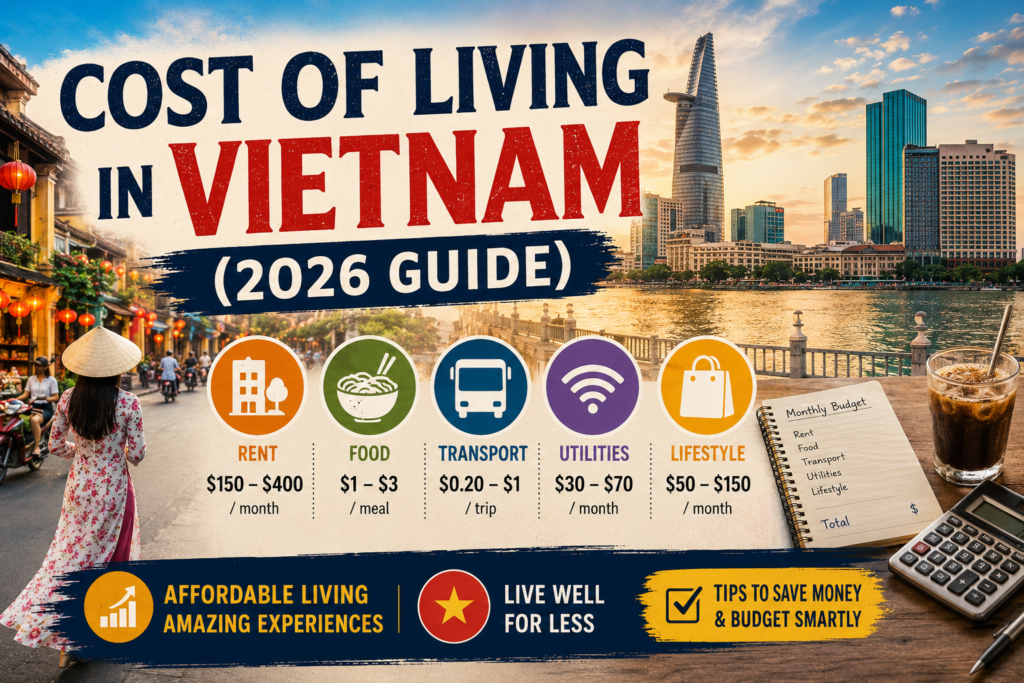
- Electricity: $40-150+ USD depending on AC usage
- Water: Often included or very cheap
- High-speed internet: $10-20 USD
- Mobile data: Extremely affordable compared to Western countries
Vietnam actually has some of the cheapest and fastest mobile internet in Southeast Asia, which remains one of the country’s biggest advantages for remote workers and digital nomads.
Food costs: Cheap street food vs expensive Western living
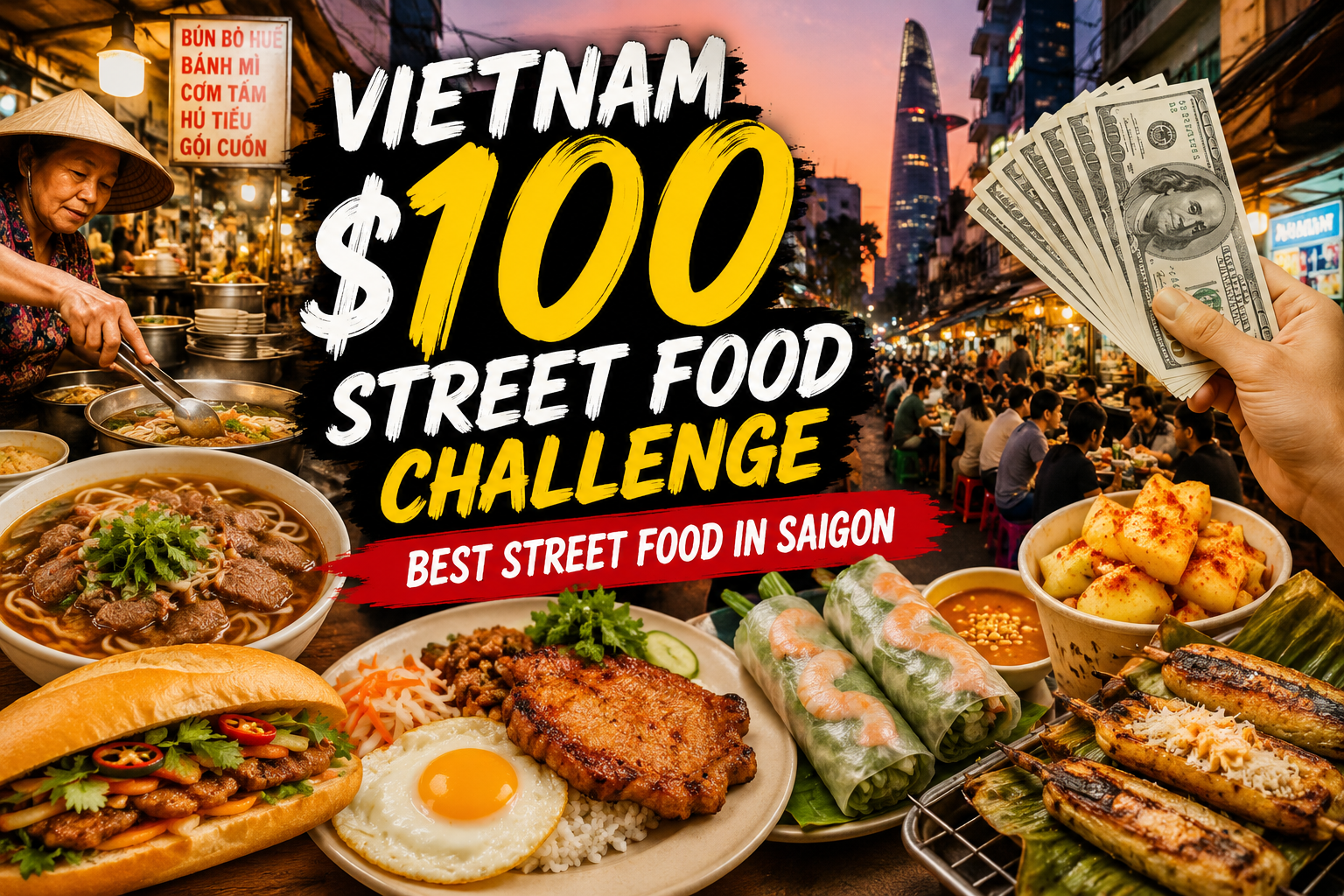
Food is where Vietnam can still feel incredibly affordable, if you eat local. Street food remains one of the country’s greatest bargains. Dishes like phở, bún bò, cơm tấm, and bánh mì often cost between $1–3 USD even in major cities.
Local coffee culture is also remarkably cheap compared to Western countries. Sitting at a Vietnamese café with iced coffee for hours may cost only a few dollars. But once you shift toward imported groceries, international restaurants, wine, or Western-style diets, prices rise fast.
Many expats underestimate how expensive imported products are in Vietnam. Cheese, wine, cereal, foreign snacks, and Western ingredients often cost significantly more than expected because of import taxes.
This creates an interesting paradox: You can eat cheaply in Vietnam, but living “Western” in Vietnam is not necessarily cheap.
Transportation costs in Vietnam
Transportation remains one of Vietnam’s most affordable aspects. Ride-hailing apps like Green SM, BE or Grab make getting around major cities inexpensive and convenient. Short rides often cost just a few dollars.
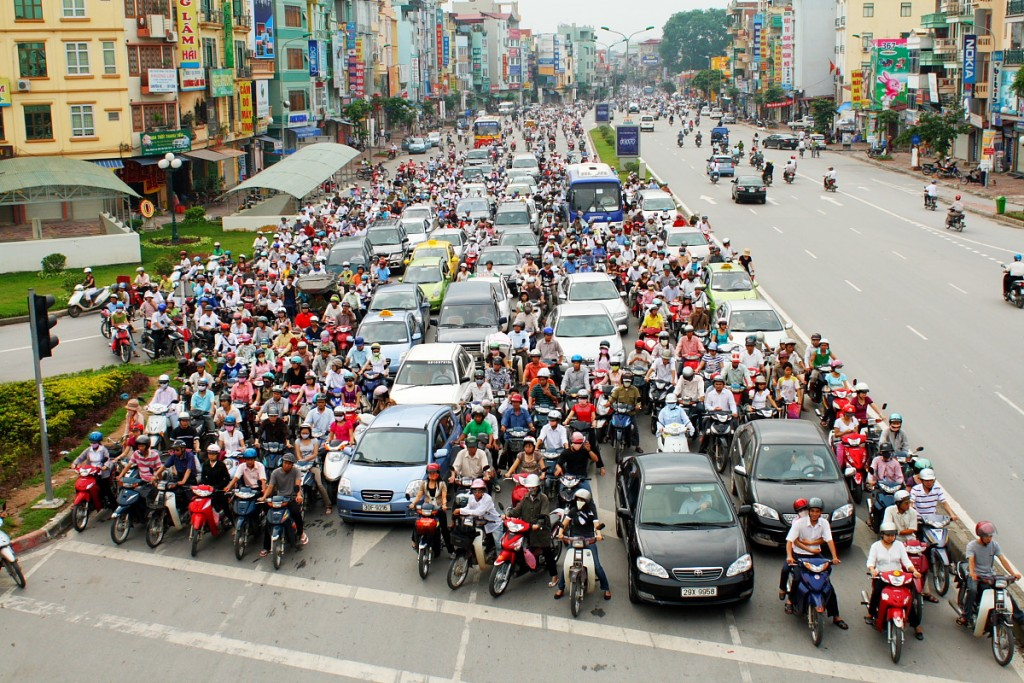
Motorbike ownership remains the cheapest long-term option for residents, though traffic conditions can feel overwhelming for newcomers.
Gasoline prices are relatively reasonable, and parking fees are usually low compared to major global cities. Public transportation is improving gradually, especially in Hồ Chí Minh City with the expansion of metro systems and waterbus routes.
Healthcare costs in Vietnam
Healthcare is another area where expectations matter greatly.
Local hospitals can be extremely affordable, but many foreigners prefer international clinics or private hospitals because of language support and higher service standards. Basic doctor visits at international clinics may cost around $30–100 USD, while more serious treatments or emergencies can become expensive quickly without insurance.
For long-term residents, international health insurance becomes increasingly important.
Vietnam offers decent healthcare value overall, but it is not always as cheap as many online guides suggest, especially if you expect Western-level facilities and service.

The hidden costs nobody talks about
One of the biggest mistakes people make when calculating Vietnam living costs is ignoring hidden expenses.
These often include:
- Visa renewals and border runs
- Deposits for apartments
- Translation/legal paperwork
- Unexpected motorbike repairs
- Health insurance
- Weekend trips and domestic flights
- Social lifestyle inflation
Lifestyle inflation is particularly common among expats.
Vietnam’s café culture, nightlife, rooftop bars, weekend travel, and social scene can quietly increase spending far beyond original expectations.
Many foreigners arrive planning to spend $800 monthly and eventually realize they are comfortably spending double that amount without noticing.
Best cities for different budgets
Each major Vietnamese city offers a very different cost-of-living experience. Hồ Chí Minh city is the most dynamic and international city, but also one of the most expensive.
Hà Nội offers a slightly more traditional atmosphere with similar pricing in central districts.
Đà Nẵng remains one of the most popular choices for expats seeking a balance between affordability, beaches, and modern living. Meanwhile, smaller cities and rural areas remain dramatically cheaper, but may lack international amenities and expat infrastructure.
Can you really live in Vietnam on $500/month?
Technically, yes.
Comfortably? For most foreigners in 2026, probably not.
A $500 monthly budget generally means sacrificing comfort, convenience, privacy, and flexibility. It may work short-term for minimalist travelers, but it becomes far more difficult for long-term sustainable living, especially in major cities.
The reality is that Vietnam is evolving rapidly. Salaries, property values, and urban development continue rising every year. The country is no longer the ultra-cheap secret destination it once was.
But despite rising costs, Vietnam still offers something many countries cannot:
A vibrant lifestyle, incredible food culture, warm local communities, tropical weather, and a level of day-to-day excitement that keeps attracting people from around the world.
Final thoughts
The cost of living in Vietnam in 2026 is ultimately about expectations.
If you arrive expecting a luxury lifestyle for a few hundred dollars a month, you may feel disappointed. But if you understand the realities of modern Vietnam, and budget realistically, the country can still offer tremendous value and an incredibly rewarding quality of life.
Vietnam is changing fast. Prices are rising. Cities are modernizing. But compared to much of the world, it still remains one of the most exciting and relatively affordable places to live in Asia.
The key is understanding the difference between surviving cheaply and living comfortably.

Ready to explore the real Saigon?
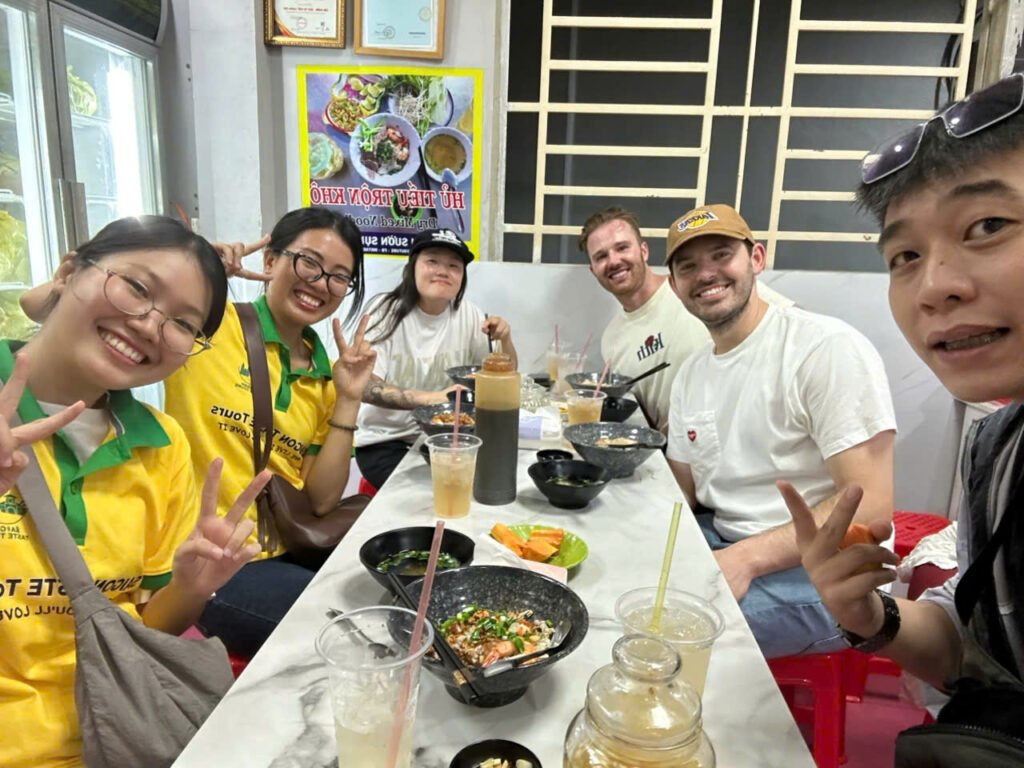
Discover the city beyond the tourist spots with Saigon Taste Tours. Come explore the real Saigon with us – where you don’t just see the city, you taste it.
For custom itineraries and group bookings, pricing depends on group size. Contact Ben via WhatsApp: +84 383 624 632. If you have any questions, please don’t hesitate to ask.We are looking forward to showing you around our lovely country!
Book your experience today and discover Vietnam like a local!


Saigon Taste Tours team
Welcome to SAIGON TASTE Tours! We’re a team of passionate local guides dedicated to sharing the real Saigon and Vietnam through food, culture, and hidden gems. From bustling street food stalls and historic landmarks to outdoor adventures and peaceful nature escapes, our tours are designed to be authentic and unforgettable. Every experience is private and tailored to you, guided by knowledgeable locals who go above and beyond to make you feel like you’re exploring with a friend. With us, you won’t just visit Vietnam — you’ll truly experience it. We can’t wait to welcome you! Best regards, Ben and the SAIGON TASTE Tours
saigontastetours@gmail.com Click to Connect with Us
Leave a Reply