
Before Modern Saigon: Discovering the City’s Oldest Church
When travelers imagine Saigon, they often picture endless motorbikes, rooftop bars, vibrant street food scenes, and modern skylines rising above historic boulevards. Yet beneath the fast pace and contemporary energy of Vietnam’s largest city lies a quieter story, one that began centuries before modern districts, luxury towers, and international cafés transformed the urban landscape. To truly understand Saigon, visitors sometimes need to look beyond the obvious landmarks and step into places that preserve the city’s earliest identity.
Among these places stands a remarkable piece of living history: Cho Quan Church, widely recognized as one of the oldest surviving Catholic churches in Saigon and among the earliest established churches in the region.
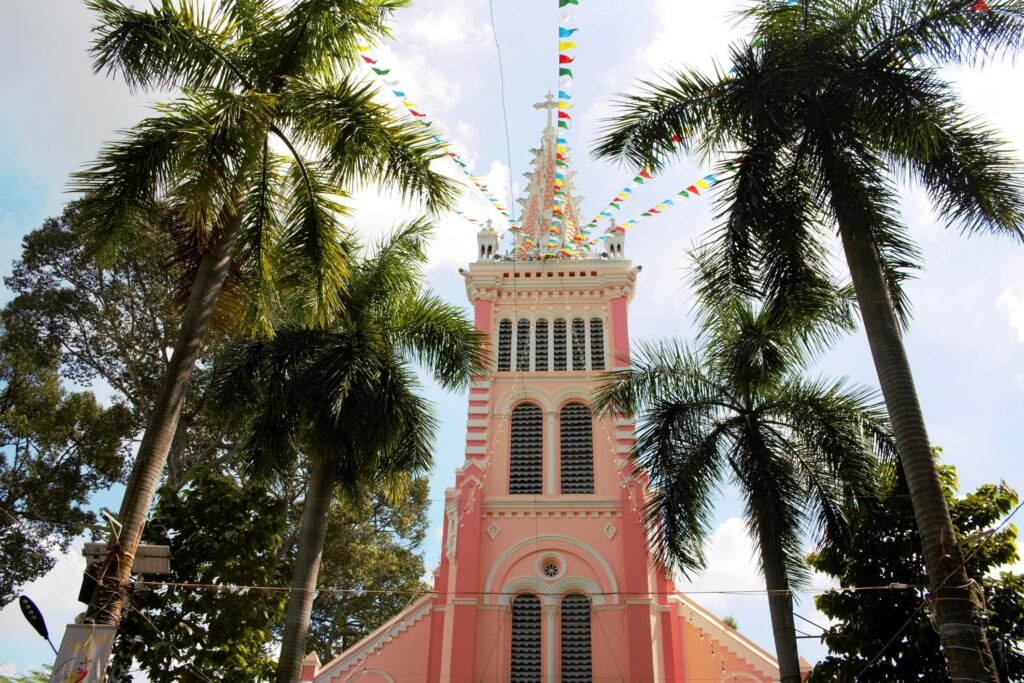
Long before the city became Ho Chi Minh City and before downtown streets filled with modern life, this church witnessed the growth of communities, colonial transitions, cultural exchanges, and generations of local stories. Visiting it today feels less like entering a tourist attraction and more like opening a forgotten chapter of Saigon’s past.
For travelers seeking experiences beyond the usual itinerary, discovering the oldest church in Saigon offers a meaningful glimpse into the city’s historical soul.
Looking Beyond Modern Saigon
Modern Saigon moves fast. The city’s energy is impossible to ignore. Cafés open before sunrise, markets stay lively throughout the day, and neighborhoods continuously reinvent themselves. For first-time visitors, the excitement often comes from embracing this movement, crossing crowded streets, discovering hidden alleys, and tasting local dishes that define everyday life.
But cities are never built overnight. Before luxury hotels and skyscrapers appeared, Saigon developed through riverside settlements, merchant communities, religious centers, and cultural exchanges. Churches, temples, and historic neighborhoods became gathering places that shaped how local communities lived and connected.
Many travelers visit iconic sites in District 1 and leave believing they have seen Saigon’s history. Yet some of the city’s oldest stories remain quietly preserved in neighborhoods outside the standard tourist route. Cho Quan Church is one of those places.
Unlike heavily photographed landmarks, this historic church offers something more intimate: the opportunity to experience a side of Saigon that still feels rooted in memory.
The Story Behind Saigon’s Oldest Church
The origins of Cho Quan Church trace back to the early eighteenth century.
Historical records suggest that Catholic communities began forming in the area during the 1720s, making it one of the earliest centers of Catholic worship in what would later become Saigon. The church itself has gone through multiple periods of rebuilding and restoration over generations, reflecting both historical change and the resilience of local communities.
The current structure visible today was developed during later reconstruction periods while preserving the spiritual and historical significance of the original church site. Its location in what is now District 5 also tells an important story.
This area historically served as a crossroads connecting local Vietnamese communities, Chinese merchants, and expanding urban settlements. Rather than existing in isolation, the church became part of a broader cultural landscape where different traditions interacted and evolved together.
Standing inside the church today, visitors may notice that the atmosphere feels different from more famous religious sites. There is less spectacle. Less noise. And perhaps because of that, there is more room to imagine the city that once existed here.
Architecture That Carries Generations of History
One of the most rewarding aspects of visiting the oldest church in Saigon is observing how architecture preserves memory. Unlike grand European cathedrals designed to overwhelm visitors with scale, Cho Quan Church creates a sense of closeness and continuity.
The exterior reflects colonial-era influences while maintaining local adaptation. Elegant arches, tall windows, balanced proportions, and subtle decorative details reveal architectural trends introduced during historical periods of French influence. At the same time, the building feels connected to the surrounding neighborhood rather than separated from it.
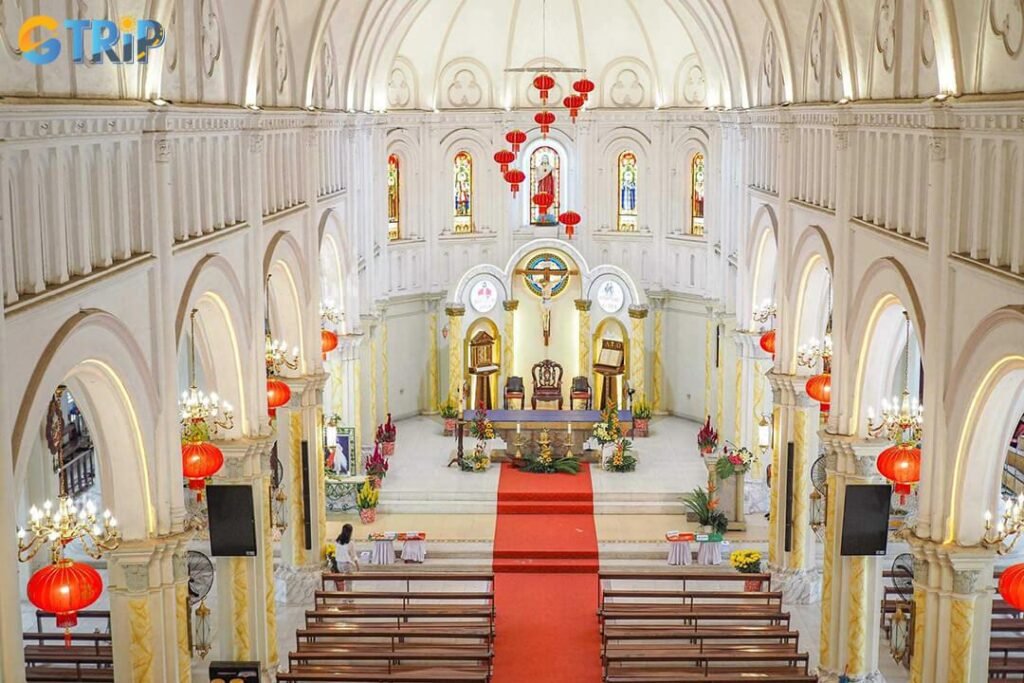
Inside, natural light becomes part of the experience. Sunlight enters through stained glass windows and gradually moves across wooden furnishings and quiet prayer spaces throughout the day. The result is an atmosphere that feels reflective without becoming overly formal.
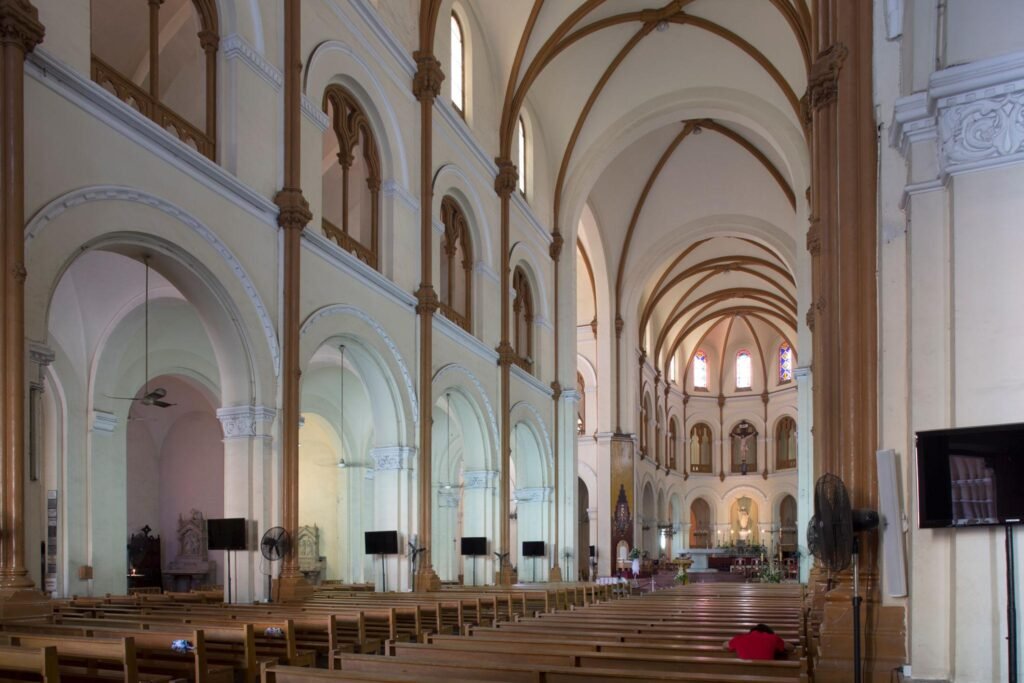
Visitors interested in architecture often notice details that reveal different phases of restoration and preservation. Every wall, column, and design element reflects choices made across generations. Unlike reconstructed attractions created for tourism, this church continues serving its original purpose while carrying centuries of accumulated history.
A Place That Witnessed the Evolution of Saigon
Historic places become meaningful not simply because they are old, but because of everything they have endured and everything they continue to remember.
For centuries, Cho Quan Church has remained part of Saigon’s changing landscape, standing through periods of political transition, urban expansion, and the city’s remarkable transformation into the dynamic destination visitors know today.
Walking through the church, it is difficult not to imagine the countless lives that once passed through these same spaces. Early settlers built communities here long before modern Saigon emerged. Families gathered for important milestones, children grew up alongside changing neighborhoods, and generations adapted to shifting times while continuing traditions that connected them to one another.
As the city expanded from riverside settlements into one of Southeast Asia’s most energetic urban centers, the church remained quietly present, observing, enduring, and evolving alongside the community around it.
Places like this often become more than religious landmarks. They serve as living archives of everyday life, preserving stories that are rarely recorded in history books. Moments of celebration, reflection, loss, and ordinary routines all leave invisible traces behind, creating a deeper connection between place and memory.
For travelers interested in experiencing the cultural side of Saigon, historic churches can offer something museums alone cannot provide. Museums preserve history through collections and exhibitions, but churches continue to function as part of modern life, allowing visitors to experience history within a space that remains active and meaningful today.
That sense of continuity, the feeling that the past still exists within the present, is often what makes visiting places like Cho Quan Church so memorable.
Why Travelers Should Visit Historic Churches in Ho Chi Minh City
Travel itineraries often focus on famous attractions, iconic landmarks, and must-see locations, and understandably so. These places help introduce visitors to the city’s identity and deserve their place on any itinerary. However, adding historic churches to the journey offers a deeper and more balanced perspective of Saigon beyond its modern image.
Visiting historic churches in Ho Chi Minh City invites travelers to slow down and experience the city at a different pace. These spaces encourage visitors to notice details that are often missed while moving quickly between popular attractions.
There is beauty in the architecture, reflected in aged facades, quiet interiors, and design elements that have survived generations. There is history embedded within the walls, telling stories of communities that lived through different periods of the city’s development. There is culture expressed through traditions, daily rituals, and the continued presence of local life.
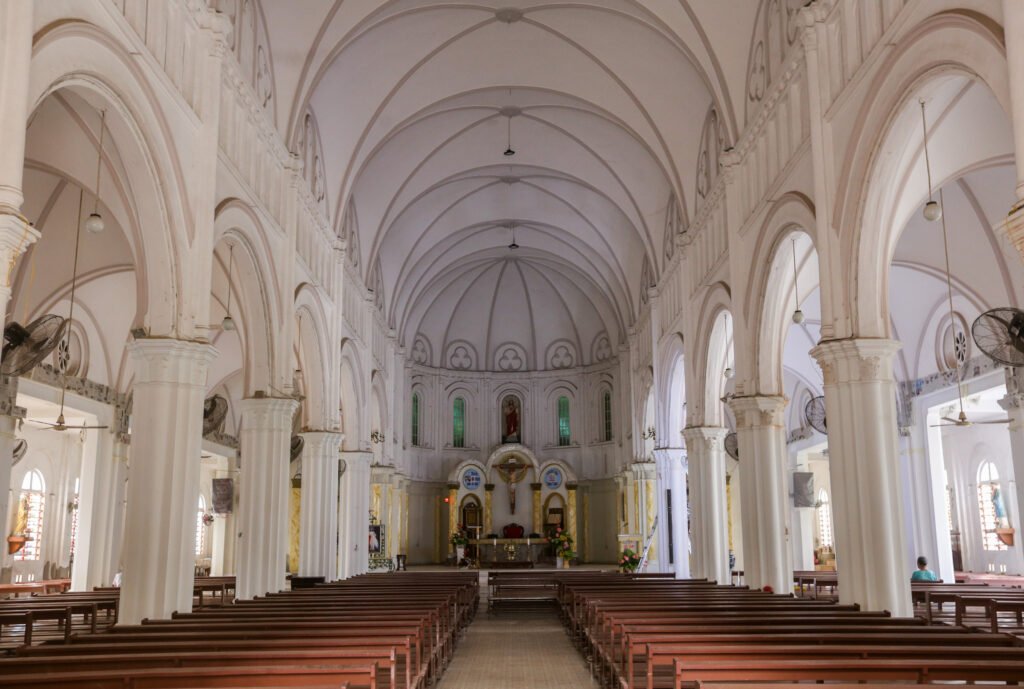
But beyond all of these, there is something less visible and far more memorable: perspective.
Stepping out of busy streets and into a quiet historic church changes the atmosphere completely. The energy of the city softens. Time feels slower. Details become more noticeable. In those quieter moments, visitors begin to recognize the contrast that defines Saigon itself, a city constantly moving forward while still carrying traces of its past.
Cho Quan Church captures this experience beautifully. More than a historic landmark, it serves as a reminder that beneath Saigon’s modern skyline and fast-paced lifestyle lies a city shaped by generations of stories, traditions, and places that continue to endure. Discovering these spaces allows travelers to experience not only what Saigon is today, but also understand how it became the city it is now.
Exploring Beyond the Church: Discovering the Character of District 5
One of the most rewarding parts of visiting Cho Quan Church is realizing that the experience does not end at the church gates. The surrounding neighborhood becomes part of the journey itself, offering travelers a chance to discover a side of Saigon that feels quieter, older, and deeply connected to everyday local life.
Located in District 5, an area historically linked to Cho Lon, the city’s traditional Chinese quarter, this part of Saigon carries a distinct atmosphere that differs from the more familiar tourist areas in the city center. Here, history feels woven into daily routines rather than presented as a separate attraction.
A simple walk through the nearby streets reveals layers of local life unfolding naturally. Small cafés fill with morning conversations, neighborhood markets open for the day, traditional storefronts continue serving long-time residents, and food stalls begin preparing breakfast recipes that have remained popular across generations.
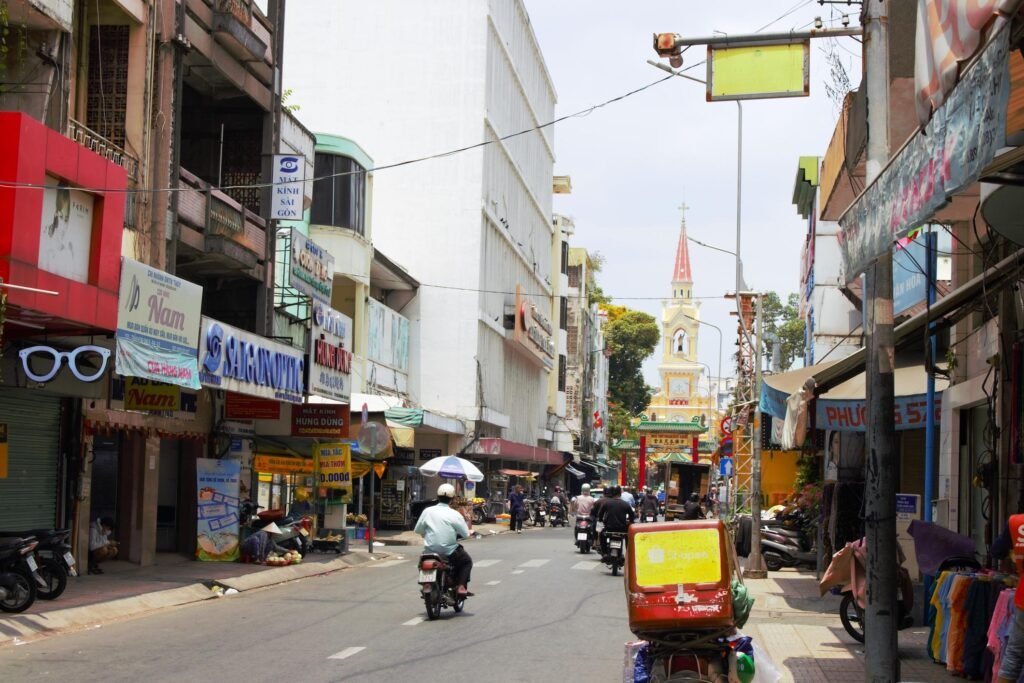
Early morning is often one of the best times to explore. As the city slowly wakes up, visitors can experience a rhythm of life that feels authentic and unhurried. Locals gather over strong Vietnamese coffee, vendors arrange fresh ingredients, and familiar routines create a sense of continuity between past and present.
Instead of moving quickly from one landmark to the next, spending time in the neighborhood allows travelers to see how historic spaces continue existing within modern Saigon. The contrast between old architecture and contemporary city life creates moments that feel both visually striking and culturally meaningful.
For photographers and curious travelers alike, District 5 offers countless opportunities to capture details that tell a deeper story of the city, where heritage, community, and everyday life continue to coexist in unexpected ways.
How To Experience The Church Respectfully
Visiting a historic church is not only an opportunity to admire architecture or learn about the past, it is also a chance to step into a space that continues to hold meaning for the local community today.
As with many religious sites, visitors are encouraged to dress respectfully, particularly during worship hours or community gatherings. While photography is generally welcomed, taking photos quietly and thoughtfully helps maintain the atmosphere and ensures that religious activities remain undisturbed.
More importantly, it is worth remembering that places like Cho Quan Church are not preserved solely as historical landmarks. They remain active spiritual spaces where generations of residents continue to gather, reflect, and practice their traditions.
Rather than rushing through the visit or focusing entirely on capturing photographs, travelers may find more value in slowing down and simply observing. Notice how natural light moves through the interior, listen to the quiet rhythm of the surroundings, and take in details that reveal the church’s long connection to the city.
Sometimes, the most memorable part of the experience is surprisingly simple, finding a quiet seat for a few moments and allowing the atmosphere to unfold naturally. In a city as energetic and fast-moving as Saigon, this brief pause inside one of its oldest churches can become one of the most peaceful and meaningful moments of the journey.
Discovering Hidden Layers of Saigon Through Local Experiences
The most memorable journeys are rarely defined by a single attraction. Instead, they are shaped by how different places, stories, and experiences connect to reveal the true character of a destination.
Visiting the oldest church in Saigon becomes even more meaningful when combined with exploring the surrounding neighborhoods, tasting local flavors, and hearing stories that rarely appear in guidebooks. This is where the city begins to feel less like a collection of tourist stops and more like a place with depth, memory, and identity. Saigon does not reveal itself all at once.
Its charm unfolds gradually through moments that often happen between the major landmarks, walking through narrow alleys lined with everyday life, discovering historic buildings hidden among modern streets, stopping at a small local café, or sharing conversations over dishes that generations of residents have grown up with.
These experiences create a different perspective of the city. Rather than moving quickly from one attraction to another, travelers begin to notice the layers that exist beneath Saigon’s energetic surface. The contrast between old and new becomes more visible, and the city starts to tell a richer story.
Places like Cho Quan Church are powerful reminders that understanding Saigon is not simply about visiting famous sites. It is about discovering how history, culture, local communities, and everyday life continue to shape the city visitors experience today.
Discovering the Saigon That Came Before
Modern Saigon has earned its reputation as one of Southeast Asia’s most vibrant and fast-moving cities. It is energetic, creative, constantly evolving, and filled with experiences that attract travelers from around the world.
Yet beneath the movement and modern skyline lies another side of the city, one built over centuries through communities, traditions, and stories that continue to shape its identity today.
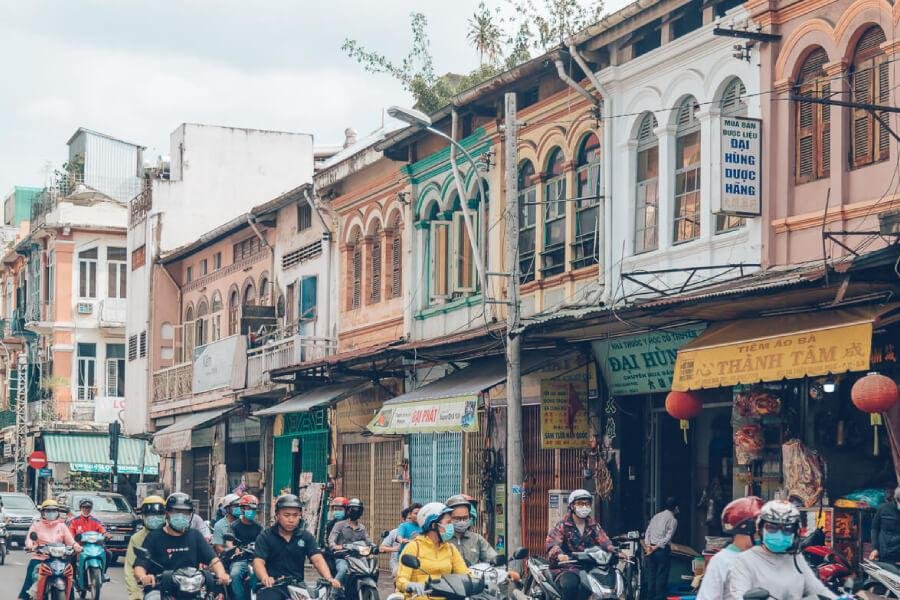
Visiting the oldest church in Saigon offers more than a historical stop on an itinerary. It creates an opportunity to connect with the earlier chapters of the city’s story to stand in a place that existed long before contemporary streets and high-rise buildings transformed the landscape, and to experience history not as something distant, but as something that still quietly lives within the present.
Cho Quan Church may not appear on every traveler’s list of famous landmarks, and perhaps that is exactly what makes it worth discovering. There are no grand crowds or dramatic displays waiting here. Instead, the experience invites visitors to slow down, observe more carefully, and appreciate the details that often go unnoticed. In doing so, travelers begin to discover a different version of Saigon, one that exists beneath the city’s energy and reveals itself through places that have endured across generations.
The next time you visit Ho Chi Minh City, consider leaving a little space in your itinerary for places beyond the expected route. Because sometimes, the most unforgettable way to understand a modern city is to begin with its oldest stories.
History tells one side of Saigon. Food, neighborhoods, and local stories reveal the rest. At Saigon Taste Tours, we believe travel becomes unforgettable when you connect with the city through authentic local experiences, not only by visiting famous landmarks, but by understanding the culture that shapes them.
Whether you want to explore hidden neighborhoods, taste iconic street food, or uncover the stories behind places that most visitors miss, our local guides are ready to show you another side of the city.
Come explore the real Saigon with us at Saigon Taste Tours, where you don’t just see the city, you taste it.
Discover the city beyond the tourist spots with Saigon Taste Tours. Come explore the real Saigon with us – where you don’t just see the city, you taste it.
For custom itineraries and group bookings, pricing depends on group size. Contact Ben via WhatsApp: +84 383 624 632. If you have any questions, please don’t hesitate to ask.We are looking forward to showing you around our lovely country!
Book your experience today and discover Vietnam like a local!

Saigon Taste Tours team
Welcome to SAIGON TASTE Tours! We’re a team of passionate local guides dedicated to sharing the real Saigon and Vietnam through food, culture, and hidden gems. From bustling street food stalls and historic landmarks to outdoor adventures and peaceful nature escapes, our tours are designed to be authentic and unforgettable. Every experience is private and tailored to you, guided by knowledgeable locals who go above and beyond to make you feel like you’re exploring with a friend. With us, you won’t just visit Vietnam — you’ll truly experience it. We can’t wait to welcome you! Best regards, Ben and the SAIGON TASTE Tours
saigontastetours@gmail.com Click to Connect with Us
Leave a Reply