
Hủ Tiếu Gõ in Saigon: Discover the Late-Night Street Food Culture of Ho Chi Minh City
When most travelers think about food in Saigon, the first things that usually come to mind are bánh mì and Vietnamese coffee. These are certainly two of the most recognizable parts of Vietnamese food culture, but Saigon has another side that many visitors never get to experience. It can be found in small alleys, on plastic stools, and even in the middle of the night. One of the best examples is hủ tiếu gõ, a humble noodle dish that has become closely connected with Saigon’s street food culture and everyday life.
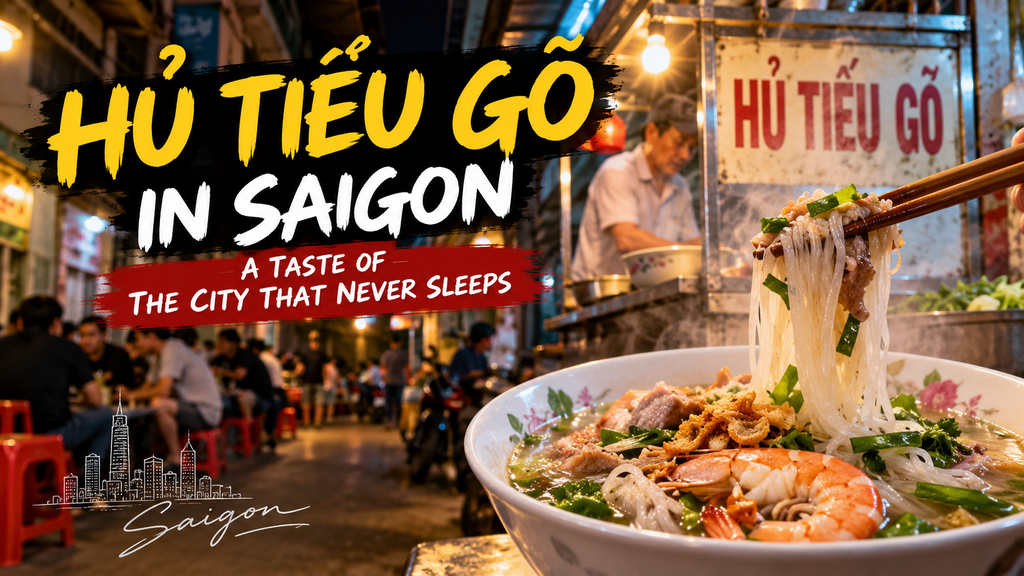
What Is Hủ Tiếu Gõ?
Hủ tiếu gõ is a simple but fascinating part of Saigon’s late-night street food culture. The dish is a version of hủ tiếu, a noodle soup commonly associated with Southern Vietnam. You may find rice noodles served with a light, flavorful broth, meat, seafood, herbs, and other simple toppings, depending on the vendor. What makes hủ tiếu gõ particularly interesting is not only the bowl itself, but also the traditional way it was sold throughout Saigon’s neighborhoods.
The word “gõ” means “to knock.” Traditionally, vendors would push small noodle carts through residential alleys at night and make a distinctive knocking sound to let people know they were nearby. Residents could hear the sound, come outside, and order a hot bowl of noodles. This simple tradition became part of everyday life in many Saigon neighborhoods.
The Origins of Hủ Tiếu in Southern Vietnam
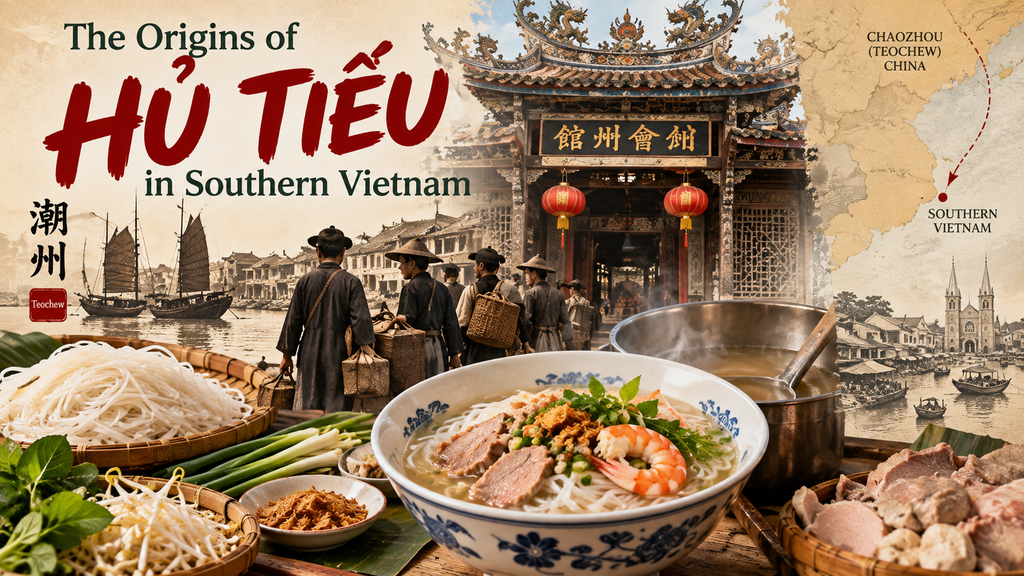
The history of hủ tiếu is closely connected with the Teochew Chinese community in Southern Vietnam. The Vietnamese term “hủ tiếu” is commonly associated with the Teochew term “củi tíu,” referring to small rice noodles. As Teochew immigrants settled in Southern Vietnam, their culinary traditions gradually interacted with local Vietnamese ingredients, cooking methods, and tastes.
Over time, hủ tiếu was adapted to suit local preferences and developed into many different versions throughout Southern Vietnam. Today, it is considered an important part of the region’s food culture, showing how different communities and culinary traditions have influenced one another.
Why Is It Called “Hủ Tiếu Gõ”?
The name itself tells an important part of the story. “Gõ” means “to knock,” referring to the sound traditionally made by vendors as they moved their food carts through neighborhood alleys. Instead of relying on a large sign or storefront, the sound of the cart became a simple way to announce that the vendor was nearby.
Imagine living in a Saigon neighborhood decades ago. Late at night, you might hear the familiar sound of a vendor approaching. You could step outside, sit down on a small plastic stool, and enjoy a warm bowl of noodles. There was no fancy restaurant and no complicated dining experience. It was simply local food being served directly to the community.
Hủ Tiếu Gõ and Saigon’s Working-Class Culture
Hủ tiếu gõ became closely connected with everyday urban life and the working community of Saigon. It offered an affordable and convenient meal for people working late, returning home after a long day, or simply looking for something warm to eat at night.
This is one reason hủ tiếu gõ is so interesting from a cultural perspective. It is not just a traditional dish; it represents a style of eating that grew naturally around the rhythm of the city. Small food carts, narrow alleys, plastic stools, and late-night customers all became part of the experience.
My Visit to Chú Tân’s Hủ Tiếu Gõ
For this story, I visited Chú Tân’s hủ tiếu gõ, a local spot that has been serving customers for more than 20 years. I came here around midnight, expecting the area to be relatively quiet. Instead, I was surprised to find the place full of customers.
The busiest time is actually between 11 PM and 1 AM. Sitting there late at night and watching people enjoy their noodles made me think about one of Saigon’s most famous nicknames: the city that never sleeps.
While many restaurants and cafés have already closed for the night, places like this are still alive with activity. People are eating, talking, working, and enjoying a simple meal together. It is a completely different side of Saigon from the busy daytime city that most tourists see.
Why Hủ Tiếu Gõ Is More Than Just a Bowl of Noodles
For me, hủ tiếu gõ is about much more than food. It represents migration, cultural exchange, local adaptation, hard work, and everyday life. The dish itself reflects how culinary traditions can travel from one community to another and gradually become part of a new place.
The late-night tradition adds another layer to the story. Hủ tiếu gõ became part of the rhythm of Saigon, serving people when many other food businesses were already closed. That connection with nighttime life is one of the reasons the dish remains such an interesting part of the city’s food culture.
Where to Experience Saigon’s Late-Night Food Culture
If you want to discover the local side of Ho Chi Minh City, don’t limit your food exploration to famous restaurants and tourist areas. Some of the most memorable experiences can happen in small neighborhood alleys, where local vendors continue traditions that have been passed down through generations.
Exploring Saigon at night gives you a completely different perspective on the city. You can see workers finishing their shifts, families having late dinners, friends gathering for food, and small vendors continuing to serve customers long after midnight.
Hủ tiếu gõ is a perfect example of this hidden side of Saigon. It may look like a simple bowl of noodles, but the experience around it tells a much bigger story about the city and its people.
Experience Saigon Like a Local
When you visit Ho Chi Minh City, you can explore famous landmarks such as the Independence Palace, Central Post Office, and Ben Thanh Market, but don’t forget to leave some time to experience everyday Saigon.
Sometimes, you don’t need to visit a famous landmark to understand a city. Sometimes, you just need to sit on a small plastic stool at one in the morning, order a bowl of noodles, and watch the city continue its nightly routine around you.
That is what makes hủ tiếu gõ so special. It is humble, affordable, local, and deeply connected to the rhythm of Saigon.
So the next time you are in Ho Chi Minh City and the clock approaches midnight, listen carefully. You might hear the sound of a small food cart coming through the alley.
Follow that sound, sit down, and discover a side of Saigon that many visitors never get to see.
Have you ever tried hủ tiếu gõ in Saigon? Share your experience in the comments, or let us know what other hidden local foods you would like to discover in Ho Chi Minh City.
Discover the city beyond the tourist spots with Saigon Taste Tours. Come explore the real Saigon with us – where you don’t just see the city, you taste it.
For custom itineraries and group bookings, pricing depends on group size. Contact Ben via WhatsApp: +84 383 624 632. If you have any questions, please don’t hesitate to ask.We are looking forward to showing you around our lovely country!
Book your experience today and discover Vietnam like a local!


Saigon Taste Tours team
Welcome to SAIGON TASTE Tours! We’re a team of passionate local guides dedicated to sharing the real Saigon and Vietnam through food, culture, and hidden gems. From bustling street food stalls and historic landmarks to outdoor adventures and peaceful nature escapes, our tours are designed to be authentic and unforgettable. Every experience is private and tailored to you, guided by knowledgeable locals who go above and beyond to make you feel like you’re exploring with a friend. With us, you won’t just visit Vietnam — you’ll truly experience it. We can’t wait to welcome you! Best regards, Ben and the SAIGON TASTE Tours
saigontastetours@gmail.com Click to Connect with Us
Leave a Reply