
Vietnam National Day September 2nd: History & Independence
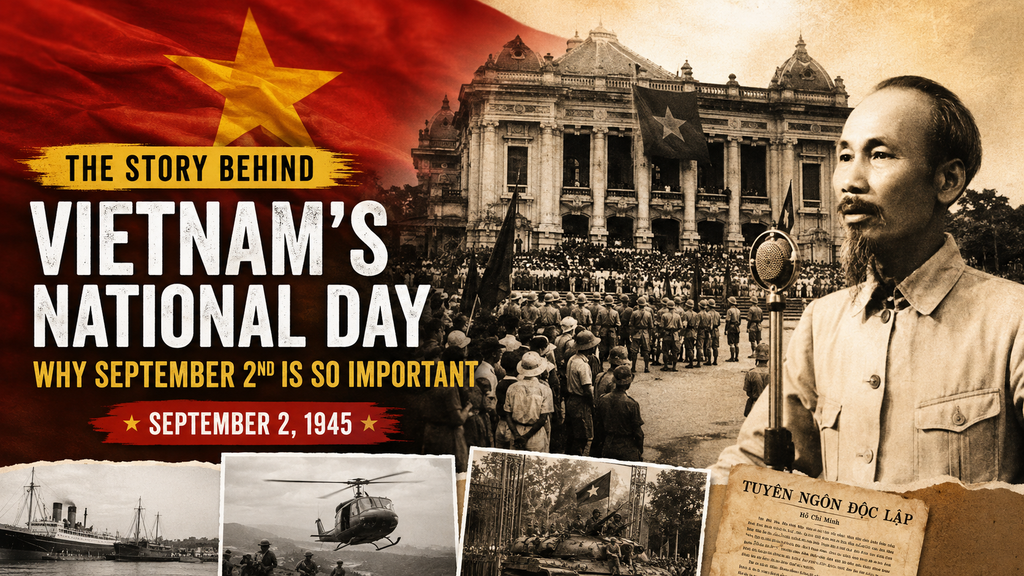
What Is Vietnam National Day?
Every year on September 2nd, Vietnam celebrates its National Day, one of the most important national holidays in the country. The date commemorates a historic moment on September 2, 1945, when Hồ Chí Minh stood before a huge crowd at Ba Đình Square in Hanoi and read the Declaration of Independence, proclaiming the establishment of the Democratic Republic of Vietnam.
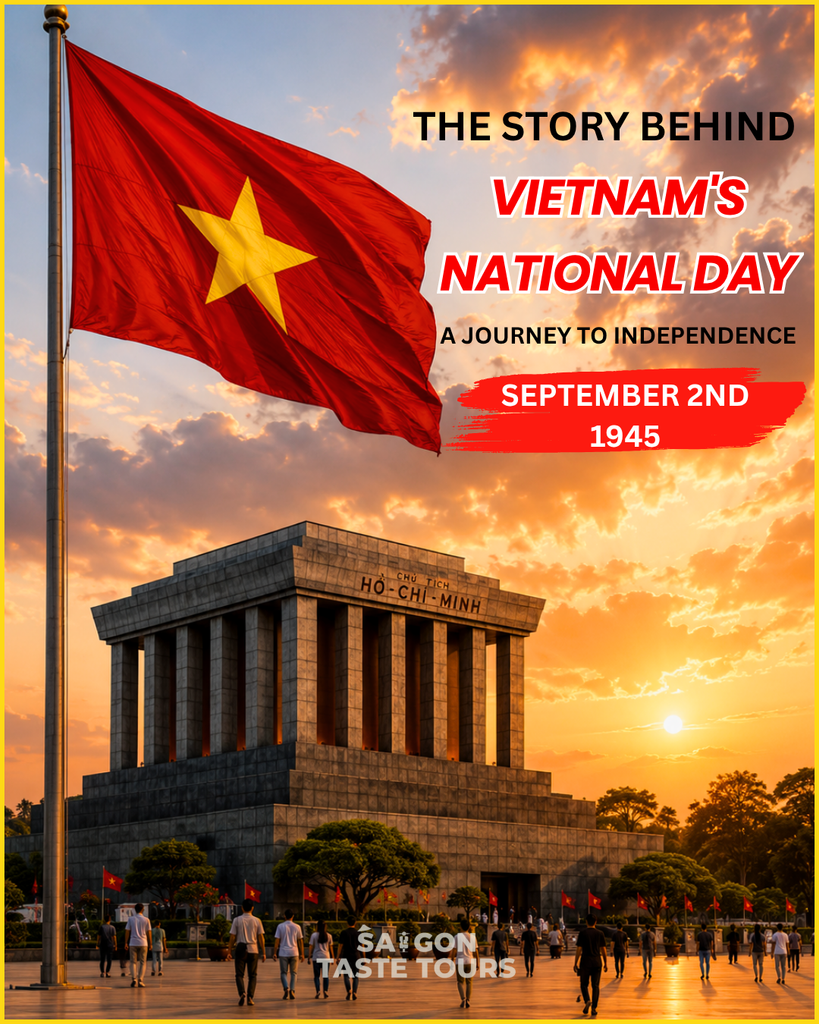
For Vietnamese people, September 2nd is much more than simply a public holiday. It represents an important chapter in the country’s long journey toward independence and national identity. To understand why this date is so meaningful, however, we need to look back several decades before 1945 and understand the events that eventually led to the declaration of independence.
Vietnam Before Independence
French Colonial Rule in Vietnam
Before Vietnam declared independence in 1945, the country had been under French colonial rule for several decades as part of French Indochina. During this period, the French colonial administration introduced major political, economic, and social changes throughout Vietnam, while Vietnamese people faced restrictions and growing economic and political pressures.
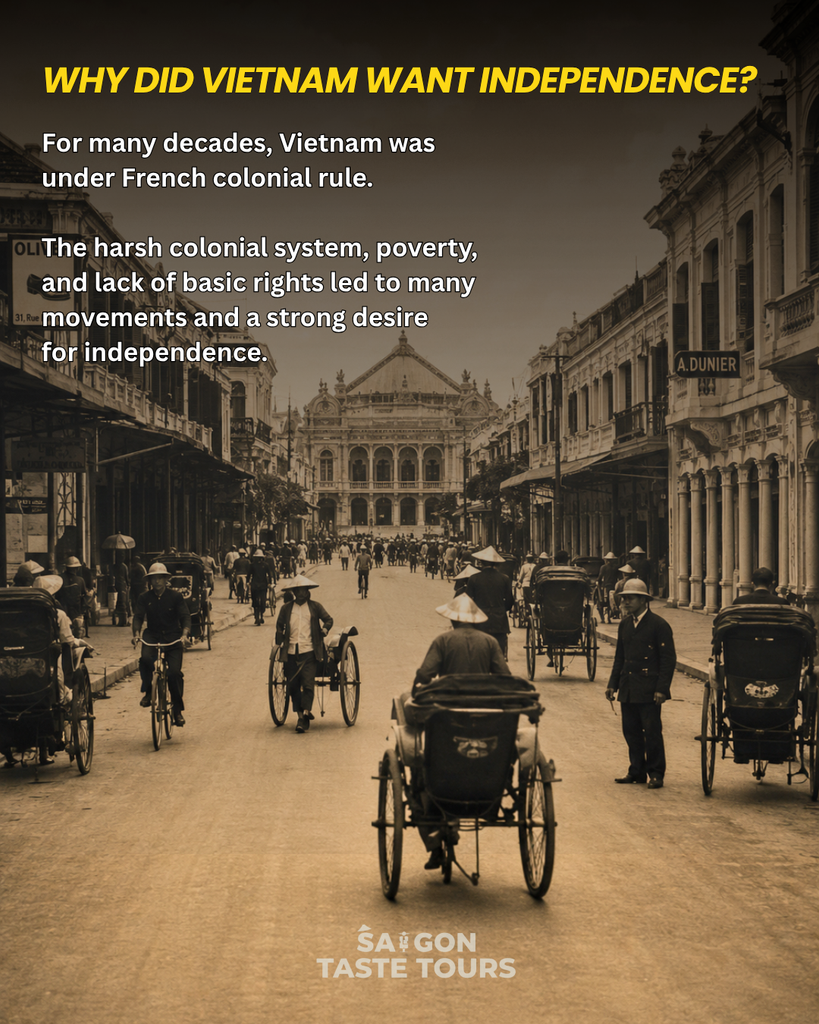
Resistance to colonial rule gradually developed in different forms. Various Vietnamese nationalists and political movements searched for ways to regain independence, but they followed different ideas about how Vietnam could achieve freedom. By the beginning of the 20th century, the desire for national independence had become an increasingly important force in Vietnamese politics.
Among the young Vietnamese who wanted to find a solution was Nguyễn Tất Thành, who would later become known around the world as Hồ Chí Minh.
1911: Nguyễn Tất Thành Leaves Vietnam
The Beginning of a Long Journey
On June 5, 1911, Nguyễn Tất Thành left Saigon from Nha Rong Wharf and began a journey that would take him to many different countries around the world. He worked and lived abroad while observing different societies, political systems, and revolutionary movements.

His journey was driven by a desire to understand how other countries had achieved independence and how Vietnam might eventually free itself from colonial rule. Rather than remaining in Vietnam and following one of the existing political movements, he chose to travel and search for a different path.
Over the following decades, Nguyễn Tất Thành became known by several names, including Nguyễn Ái Quốc, and eventually Hồ Chí Minh. His years abroad would have a profound influence on the political movement that later led to Vietnam’s declaration of independence.
1930: The Communist Party of Vietnam Is Established
Nguyễn Ái Quốc and the Communist Movement
The next major milestone came in 1930. At that time, several communist organizations had emerged among Vietnamese revolutionaries. Nguyễn Ái Quốc played a central role in bringing these organizations together and chaired a conference in Hong Kong in February 1930.
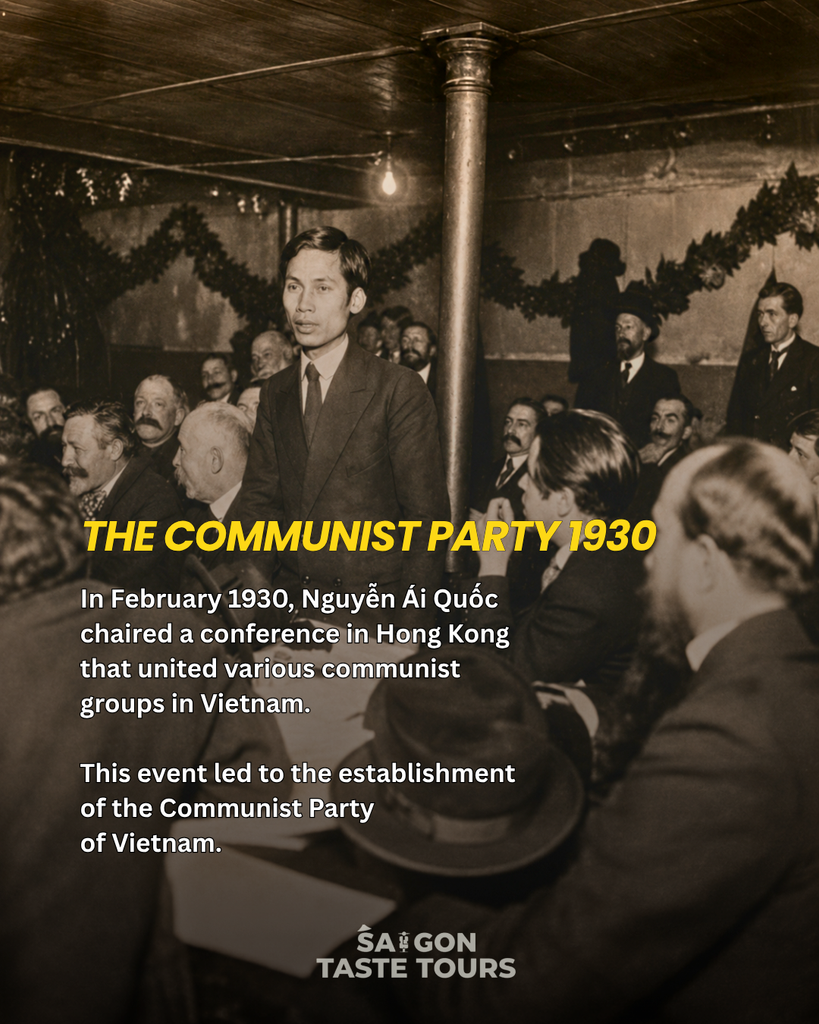
The conference resulted in the establishment of the Communist Party of Vietnam. The creation of the party was an important turning point because it provided an organized political force that would later play a leading role in Vietnam’s struggle for independence.
It is important to understand that the story of Vietnam’s independence involved both political organization and a much broader national movement. The Communist Party would become the leading political force, while later organizations such as the Viet Minh would help bring together different groups around the broader goal of national independence.
1941: Hồ Chí Minh Returns to Vietnam
The Formation of the Viet Minh
After approximately three decades abroad, Hồ Chí Minh returned to Vietnam in 1941. By this time, World War II had dramatically changed the political situation in Asia, and Vietnam was facing new challenges under both French and Japanese control.
In 1941, Hồ Chí Minh and his revolutionary colleagues helped establish the Viet Minh, formally known as the Việt Nam Độc Lập Đồng Minh Hội, or the League for the Independence of Vietnam.
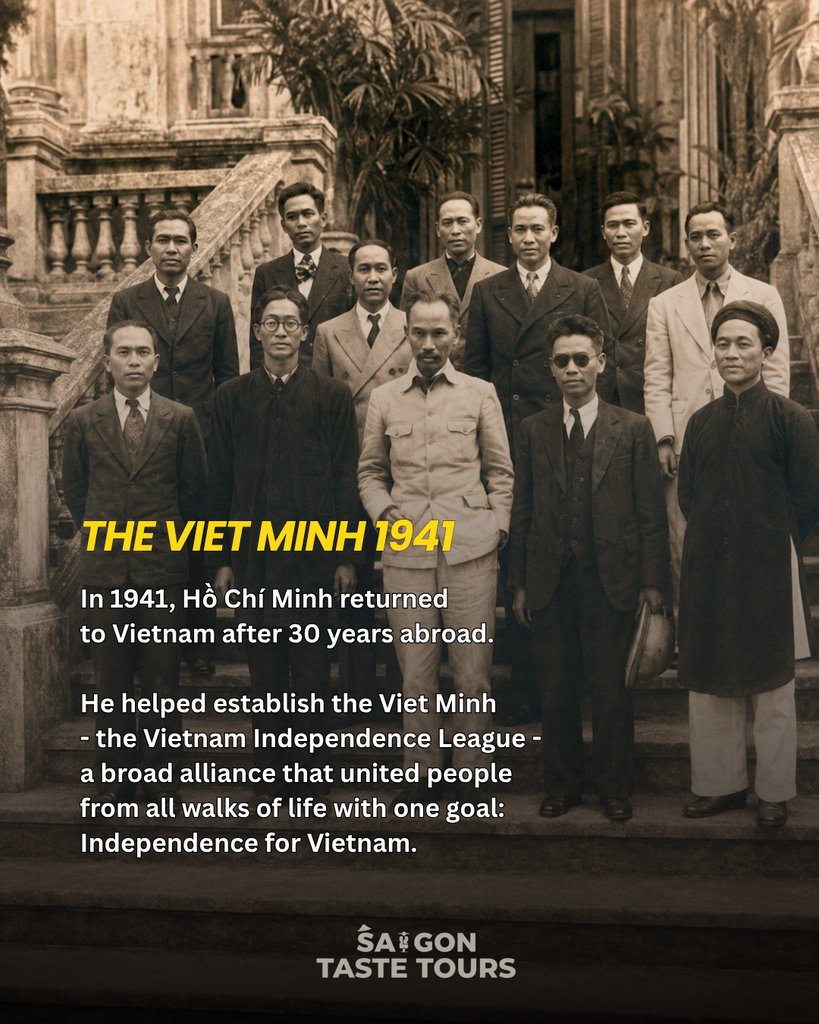
The Viet Minh was broader than the Communist Party itself. It was a national independence front intended to bring together people from different social groups and political backgrounds around a common objective: Vietnamese independence. This broader organization would become particularly important during the dramatic events of 1945.
Vietnam During World War II
Japan Enters French Indochina
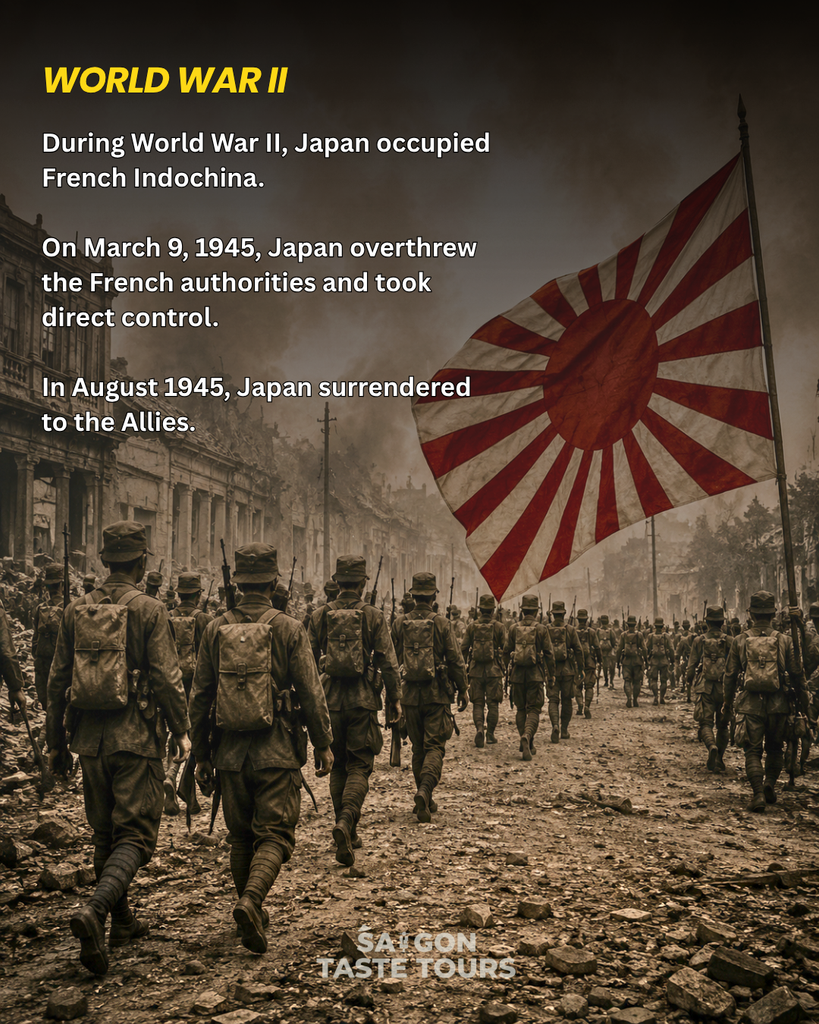
World War II created a major turning point in Vietnamese history. In 1940, Japan entered French Indochina and established increasing control over the region, while the French colonial administration initially remained in place under Japanese pressure.
The situation changed dramatically on March 9, 1945, when Japan overthrew the French administration in Indochina and took direct control. This weakened the existing political structure and created even greater instability throughout the country.
Then, in August 1945, Japan surrendered to the Allies. With Japan defeated and the previous colonial administration disrupted, Vietnam entered a period of political uncertainty and a major power vacuum emerged.
August 1945: The August Revolution
Why Was August 1945 So Important?
The Japanese surrender created an opportunity for the Viet Minh to move quickly and take control in different parts of Vietnam. The movement launched what became known as the August Revolution, a series of uprisings that rapidly changed the country’s political situation.
On August 19, 1945, the Viet Minh successfully took control in Hanoi. Similar events followed in other cities and provinces, and within a short period, the revolutionary movement had gained control over large parts of the country.
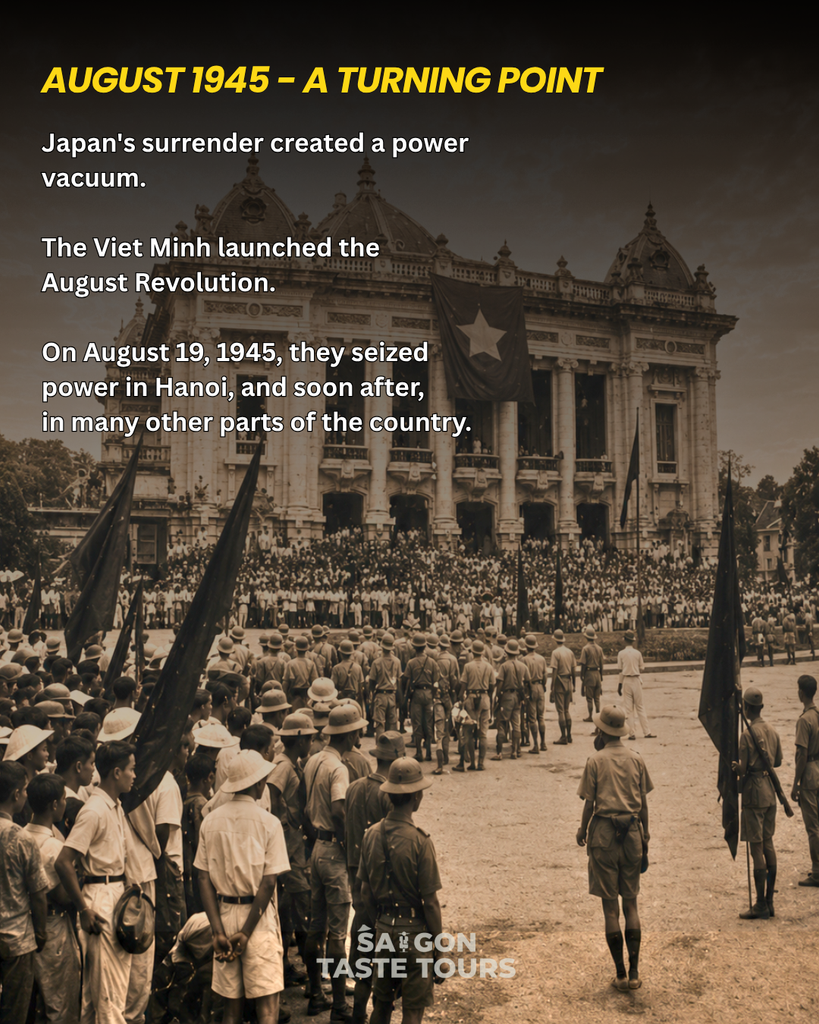
The August Revolution was a crucial step toward the declaration of independence. Only two weeks after the uprising in Hanoi, Vietnam would witness one of the most important political events in its modern history.
September 2, 1945: Vietnam Declares Independence
The Declaration of Independence at Ba Đình Square
On September 2, 1945, a huge crowd gathered at Ba Đình Square in Hanoi. Hồ Chí Minh stood before the people and read the Declaration of Independence of Vietnam.
In the declaration, he proclaimed the independence of Vietnam and announced the establishment of the Democratic Republic of Vietnam. The speech marked a historic moment after decades of colonial rule and political struggle.
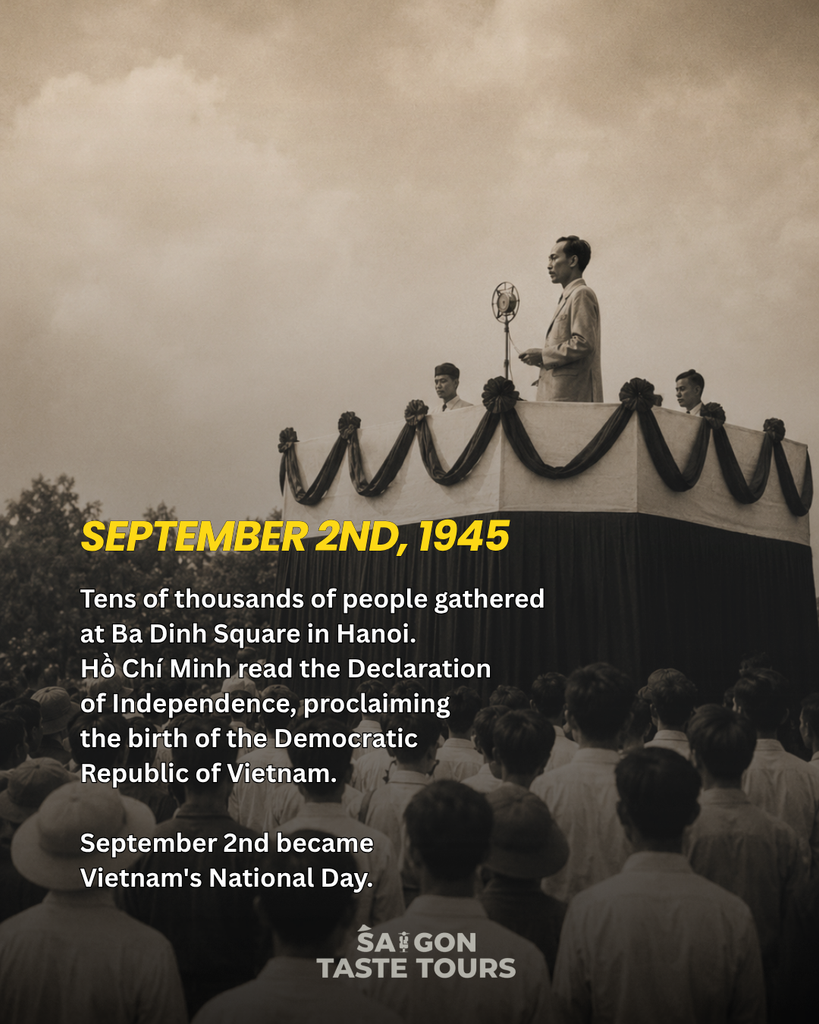
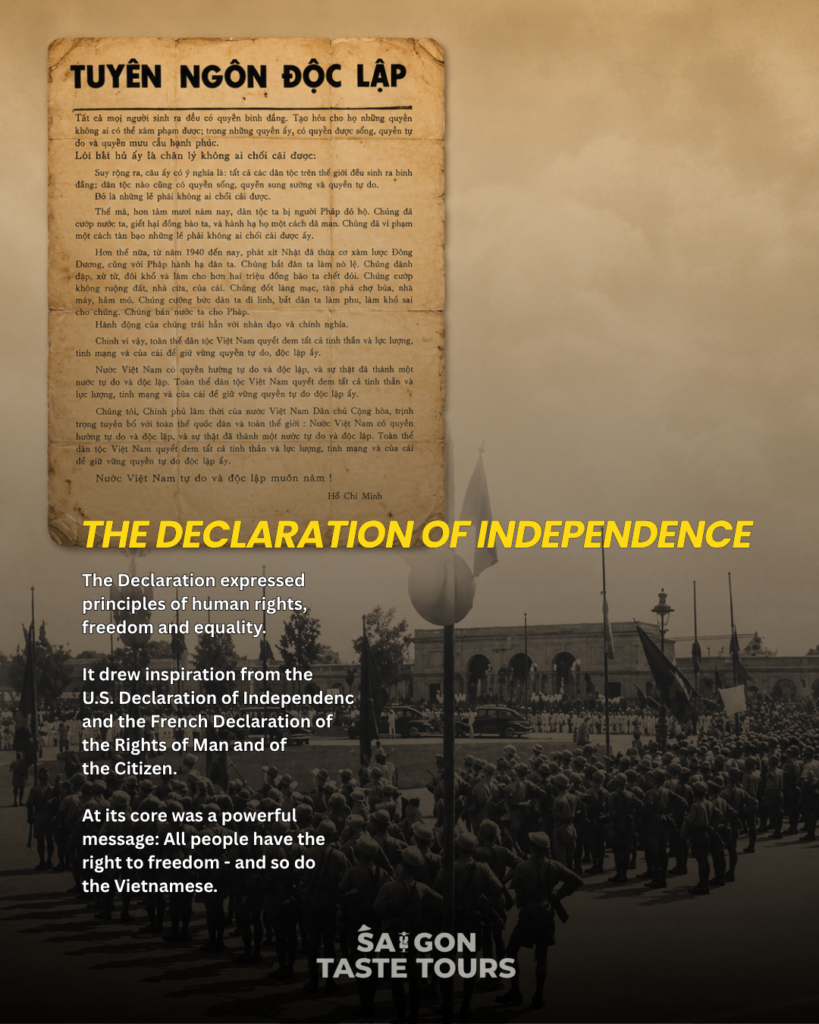
This event is the reason September 2nd became Vietnam National Day. Every year, Vietnamese people remember the date as a major milestone in the country’s modern history and its journey toward independence.
What Did the Vietnamese Declaration of Independence Say?
Ideas of Freedom, Equality, and Human Rights
One of the most interesting aspects of Hồ Chí Minh’s Declaration of Independence is the way it began. The declaration referred to principles concerning human rights, freedom, and equality, connecting Vietnam’s struggle for independence with broader ideas that had already appeared in important Western political documents.
Hồ Chí Minh quoted ideas from the United States Declaration of Independence and referred to the French Declaration of the Rights of Man and of the Citizen. The declaration used these principles to argue that if people possess fundamental rights to freedom and equality, then the Vietnamese people also had the right to freedom and independence.
For international visitors learning about Vietnam, this is an especially interesting part of the country’s history because it connects Vietnam’s independence movement with ideas about universal human rights and national self-determination.
Was Vietnam Peaceful After September 2nd?
The Struggle Continued
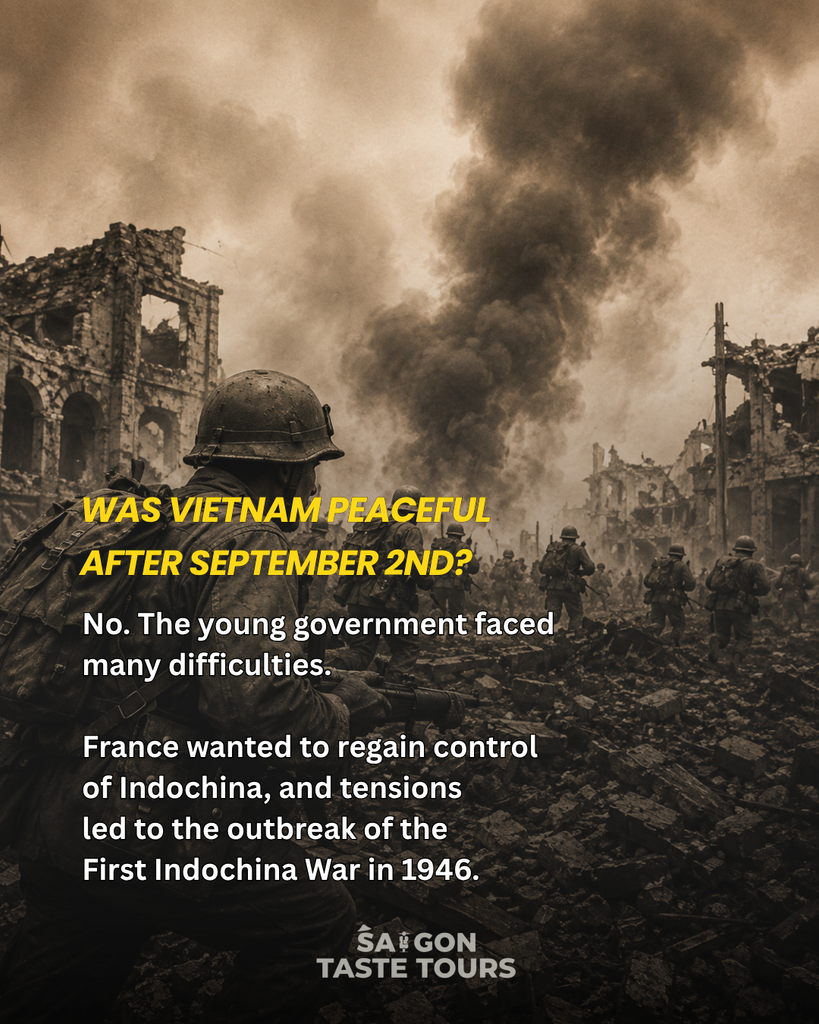
Although Vietnam had declared independence, the country did not immediately enter a period of peace. The newly established government faced enormous challenges, including economic difficulties, political instability, famine, and the presence of foreign military forces.
France also wanted to restore its influence and colonial control in Indochina. Tensions between the Vietnamese government and French forces continued to grow, eventually leading to the outbreak of the First Indochina War in 1946.
Therefore, September 2, 1945 should not be seen as the end of Vietnam’s struggle. Instead, it marked the beginning of another long and difficult chapter in the country’s history.
What Happened After Vietnam Declared Independence?

1954: The Battle of Dien Bien Phu
The First Indochina War continued for almost a decade. In 1954, Vietnamese forces defeated the French at the Battle of Dien Bien Phu, one of the most significant military events in modern Vietnamese history. The defeat contributed to the signing of the Geneva Accords, which brought the First Indochina War to an end.
Vietnam was subsequently divided into two military zones, with the Democratic Republic of Vietnam in the North and the State of Vietnam in the South. This division would eventually lead to another long period of conflict.
1954–1975: A Divided Vietnam
From 1954 to 1975, Vietnam remained divided between North and South, with the two sides following different political systems and supported by different international powers. The resulting conflict became one of the most important and devastating wars of the 20th century.
For Vietnamese people, this period brought enormous loss, displacement, and hardship. It also had a profound impact on the country’s politics, society, and economy.
1975: The War Ends
In 1975, the conflict came to an end with the fall of Saigon. The event marked the end of the long period of division between North and South and opened the way toward national reunification.
1976: Vietnam Is Reunified
In 1976, Vietnam was formally reunified as one country under its current official name, the Socialist Republic of Vietnam.
This marked another major turning point in Vietnamese history. After decades of colonial rule, revolution, war, and division, Vietnam was once again politically unified as one state.
Why Is September 2nd Important to Vietnamese People?
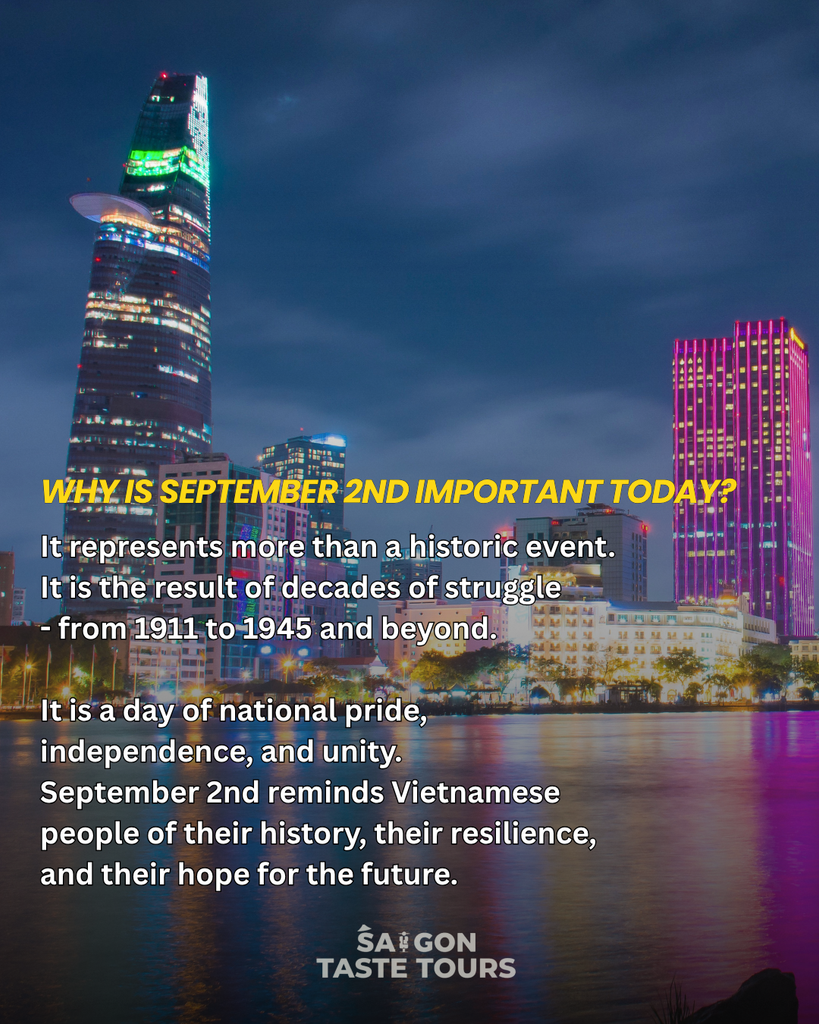
Vietnam National Day is not simply a celebration of one speech or one historical event. It represents a much longer journey that began decades earlier.
That journey includes Nguyễn Tất Thành leaving Vietnam in 1911, the establishment of the Communist Party of Vietnam in 1930, Hồ Chí Minh’s return to Vietnam and the formation of the Viet Minh in 1941, the August Revolution in 1945, and finally the Declaration of Independence on September 2, 1945.
The decades that followed brought more war, division, sacrifice, and eventually reunification in 1975–1976. For Vietnamese people, September 2nd is therefore closely connected with ideas of independence, national identity, resilience, and the country’s modern history.
How Is Vietnam National Day Celebrated Today?
Today, September 2nd is a major public holiday in Vietnam. In the days surrounding National Day, Vietnamese national flags can be seen throughout cities, towns, residential neighborhoods, shops, and public buildings.
Many Vietnamese families use the holiday as an opportunity to spend time together, travel, visit relatives, or explore different parts of the country. Major cities such as Hanoi and Ho Chi Minh City often have colorful decorations and public activities, creating a festive atmosphere throughout the streets.
For international visitors, Vietnam National Day can also be an interesting time to experience Vietnamese culture and see how historical memory remains part of everyday life. The red national flag with its yellow star becomes particularly visible, reminding people of the country’s history and national identity.
The Meaning of Vietnam National Day
At its heart, September 2nd represents independence and national identity, but the story behind the holiday is much bigger than a single date.
It is the story of a country that experienced colonial rule, revolutionary movements, World War II, decades of war and division, and eventually reunification. It is also a story of how those historical events shaped the Vietnam that travelers see today.
When you see Vietnamese flags flying throughout the streets around September 2nd, you are seeing more than holiday decorations. The flag has become a powerful symbol of the country’s history, independence, and national identity.
For Vietnamese people, National Day is a time to remember the past while also looking toward the future.
Discover Vietnam Through Its History
If you are traveling through Vietnam, understanding the history behind Vietnam National Day can give you a deeper appreciation of the places you visit.
From Ba Đình Square in Hanoi to historical sites in Ho Chi Minh City, the War Remnants Museum, the Cu Chi Tunnels, former wartime locations, monuments, and historic buildings, Vietnam’s past can still be seen throughout the country.
History is not only found in books and museums. It can be found in the streets, buildings, food, traditions, and stories shared by local people.
And perhaps the best way to understand Vietnam is not simply to read about its history, but to visit the places where that history happened and hear the stories from people who live here.
Discover the city beyond the tourist spots with Saigon Taste Tours. Come explore the real Saigon with us – where you don’t just see the city, you taste it.
For custom itineraries and group bookings, pricing depends on group size. Contact Ben via WhatsApp: +84 383 624 632. If you have any questions, please don’t hesitate to ask.We are looking forward to showing you around our lovely country!
Book your experience today and discover Vietnam like a local!
Frequently Asked Questions About Vietnam National Day
When is Vietnam National Day?
Vietnam National Day is celebrated every year on September 2nd. The date commemorates the declaration of independence in 1945.
What happened on September 2, 1945?
On September 2, 1945, Hồ Chí Minh read the Declaration of Independence at Ba Đình Square in Hanoi and proclaimed the establishment of the Democratic Republic of Vietnam.
Why does Vietnam celebrate September 2nd?
September 2nd commemorates Vietnam’s declaration of independence in 1945 and is one of the country’s most important national holidays.
Who declared Vietnam’s independence?
Hồ Chí Minh read the Declaration of Independence and proclaimed Vietnam’s independence on September 2, 1945.
When was the Communist Party of Vietnam established?
The Communist Party of Vietnam was established in February 1930, following a conference in Hong Kong chaired by Nguyễn Ái Quốc.
When did Hồ Chí Minh return to Vietnam?
Hồ Chí Minh returned to Vietnam in 1941, after approximately three decades abroad.
What was the Viet Minh?
The Viet Minh was a broad national independence front established in 1941 to unite different groups and social forces around the goal of Vietnamese independence.


Saigon Taste Tours team
Welcome to SAIGON TASTE Tours! We’re a team of passionate local guides dedicated to sharing the real Saigon and Vietnam through food, culture, and hidden gems. From bustling street food stalls and historic landmarks to outdoor adventures and peaceful nature escapes, our tours are designed to be authentic and unforgettable. Every experience is private and tailored to you, guided by knowledgeable locals who go above and beyond to make you feel like you’re exploring with a friend. With us, you won’t just visit Vietnam — you’ll truly experience it. We can’t wait to welcome you! Best regards, Ben and the SAIGON TASTE Tours
saigontastetours@gmail.com Click to Connect with Us
Leave a Reply